
使用Flutter导航组件TabBar、AppBar等为鸿蒙应用程序构建完整的应用导航体系
Flutter提供了完善的导航组件体系,包括Scaffold、AppBar、BottomNavigationBar、TabBar等核心组件。Scaffold作为页面骨架,可集成AppBar顶部导航、Drawer侧边栏等功能;AppBar支持自定义样式和集成TabBar实现标签页;BottomNavigationBar提供底部导航功能;TabBar与TabBarView配合可实现标签页内容切换。这些
·
📖 前言
导航是移动应用中最重要的功能之一,它帮助用户在不同页面和功能之间切换。Flutter 提供了丰富的导航组件,包括 AppBar、BottomNavigationBar、TabBar、Drawer、Scaffold 等,能够构建完整的应用导航体系。
🎯 导航组件概览
Flutter 提供了以下导航组件:
| 组件名 | 功能说明 | 适用场景 |
|---|---|---|
Scaffold |
页面骨架 | 应用页面基础结构 |
AppBar |
顶部导航栏 | 页面标题、操作按钮 |
BottomNavigationBar |
底部导航栏 | 主要功能切换 |
TabBar |
标签栏 | 页面内内容分类 |
TabBarView |
标签内容区 | 标签对应的内容 |
Drawer |
侧边抽屉 | 导航菜单、设置 |
BackButton |
返回按钮 | 页面返回 |
CloseButton |
关闭按钮 | 关闭对话框 |
🏗️ Scaffold 组件
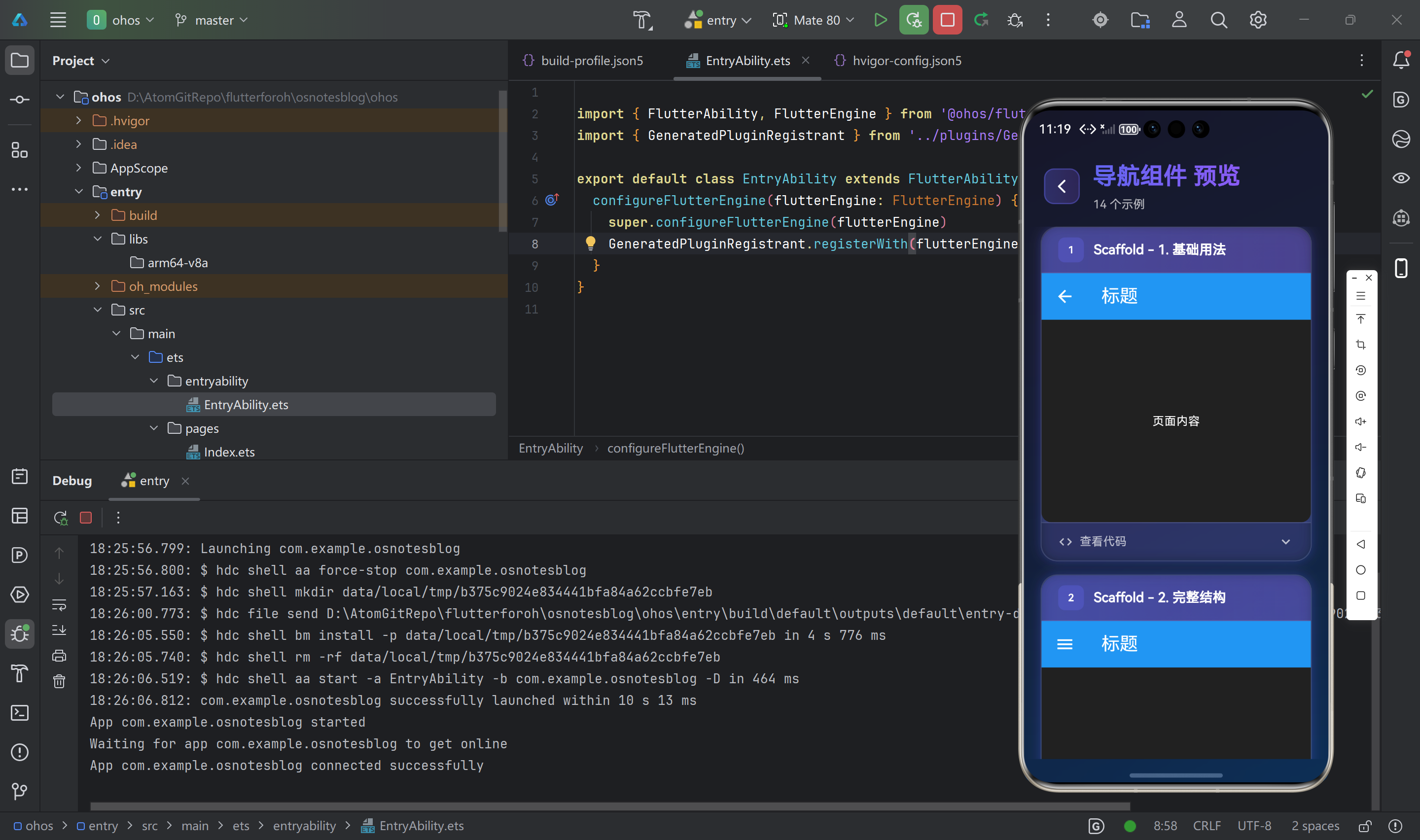
Scaffold 是 Material Design 应用的基础结构,提供了页面骨架。
基础用法
Scaffold(
  appBar: AppBar(
    title: Text('标题'),
  ),
  body: Center(
    child: Text('页面内容'),
  ),
)
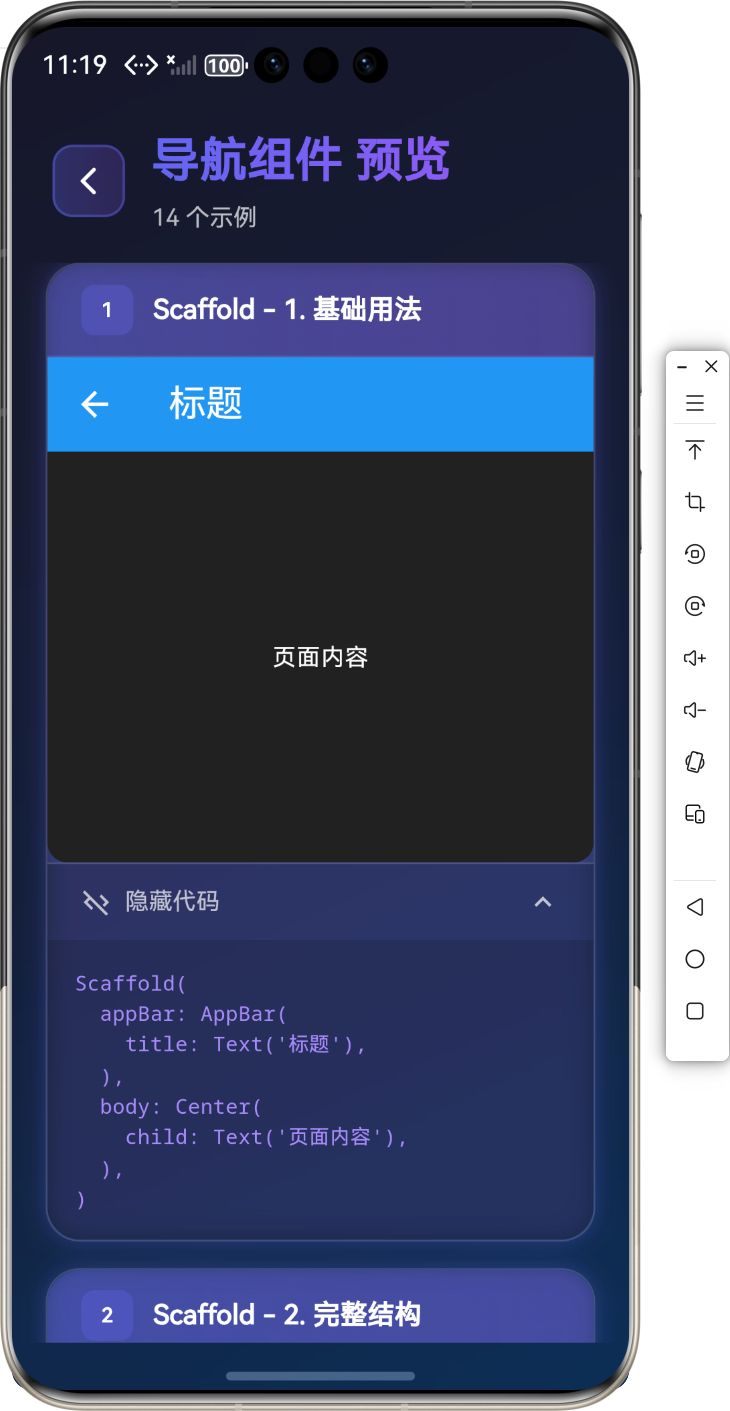
完整结构
Scaffold(
  appBar: AppBar(title: Text('标题')),
  body: Center(child: Text('内容')),
  drawer: Drawer(child: ListView(...)),
  bottomNavigationBar: BottomNavigationBar(...),
  floatingActionButton: FloatingActionButton(...),
)
📱 AppBar 组件
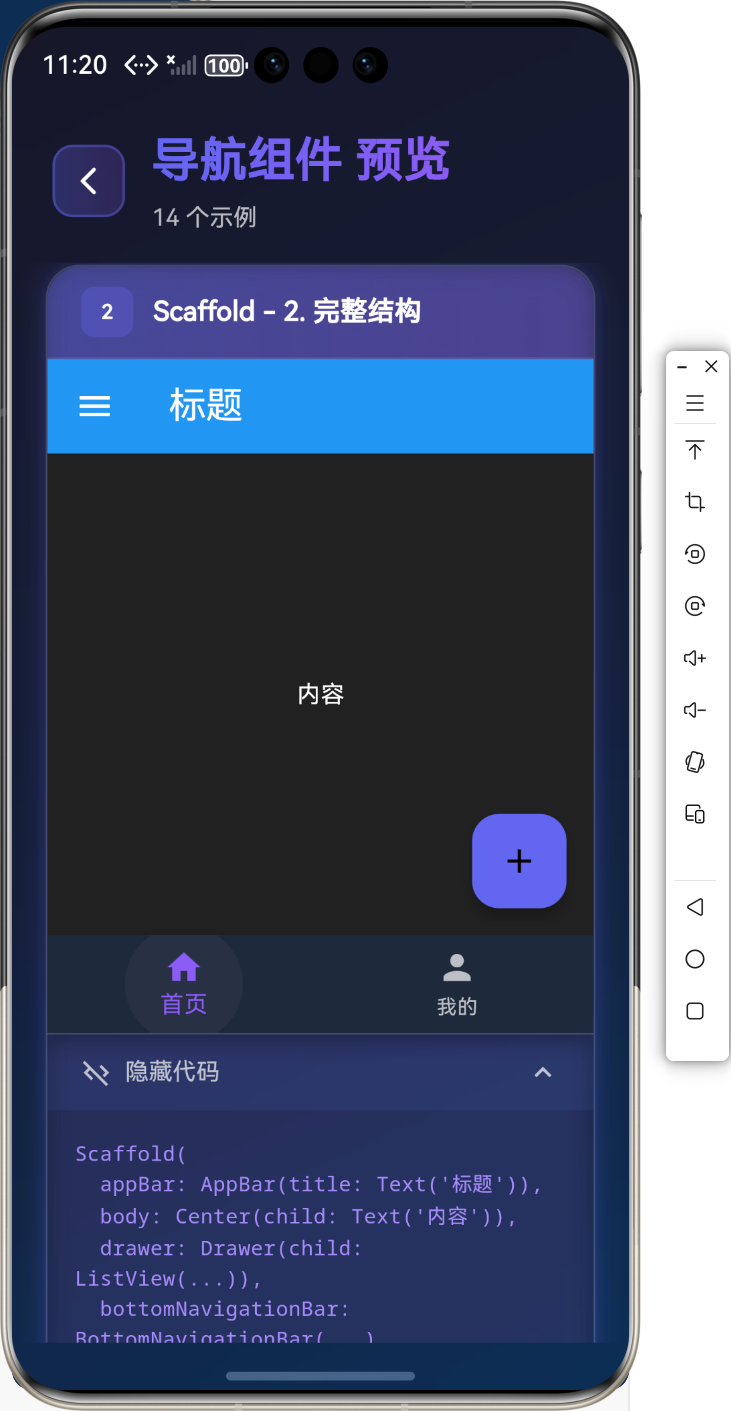
AppBar 是顶部导航栏,提供标题、返回按钮、操作按钮等功能。
基础用法
AppBar(
  title: Text('应用标题'),
  actions: [
    IconButton(
      icon: Icon(Icons.search),
      onPressed: () {},
    ),
  ],
)
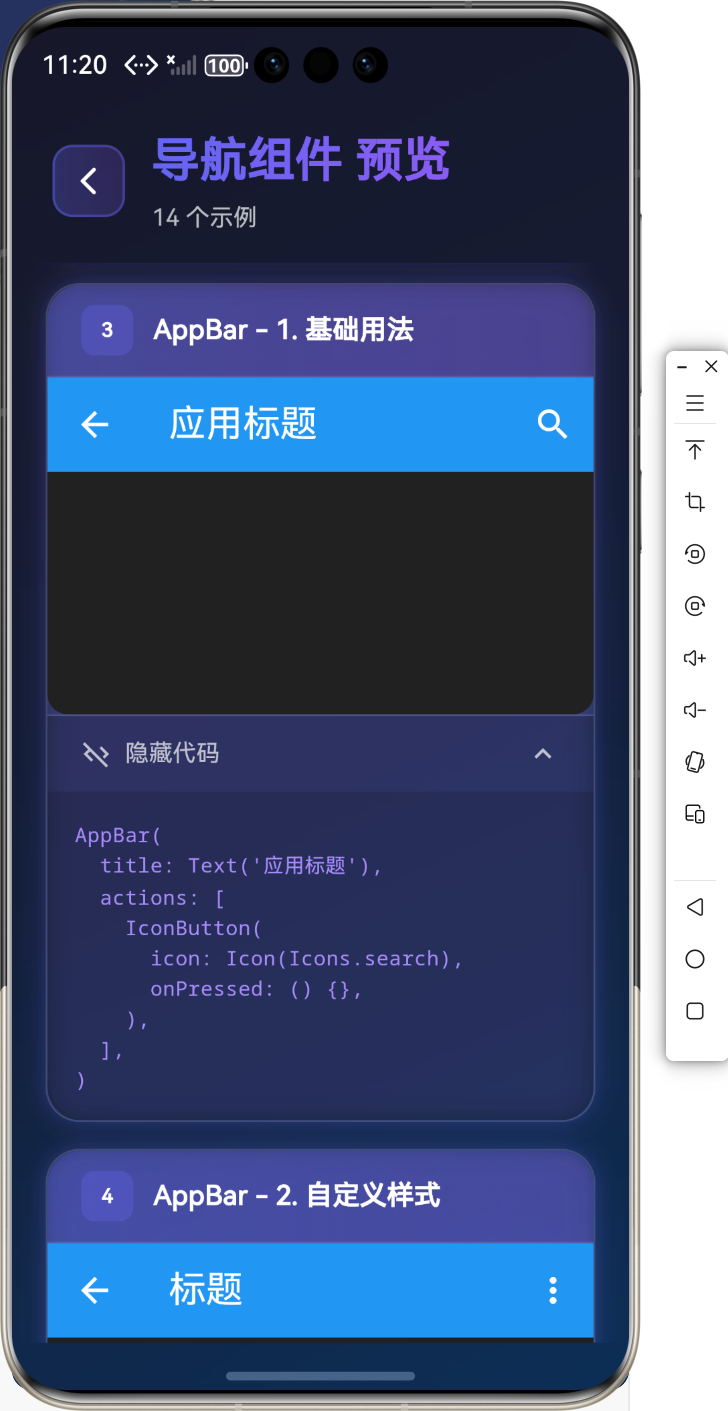
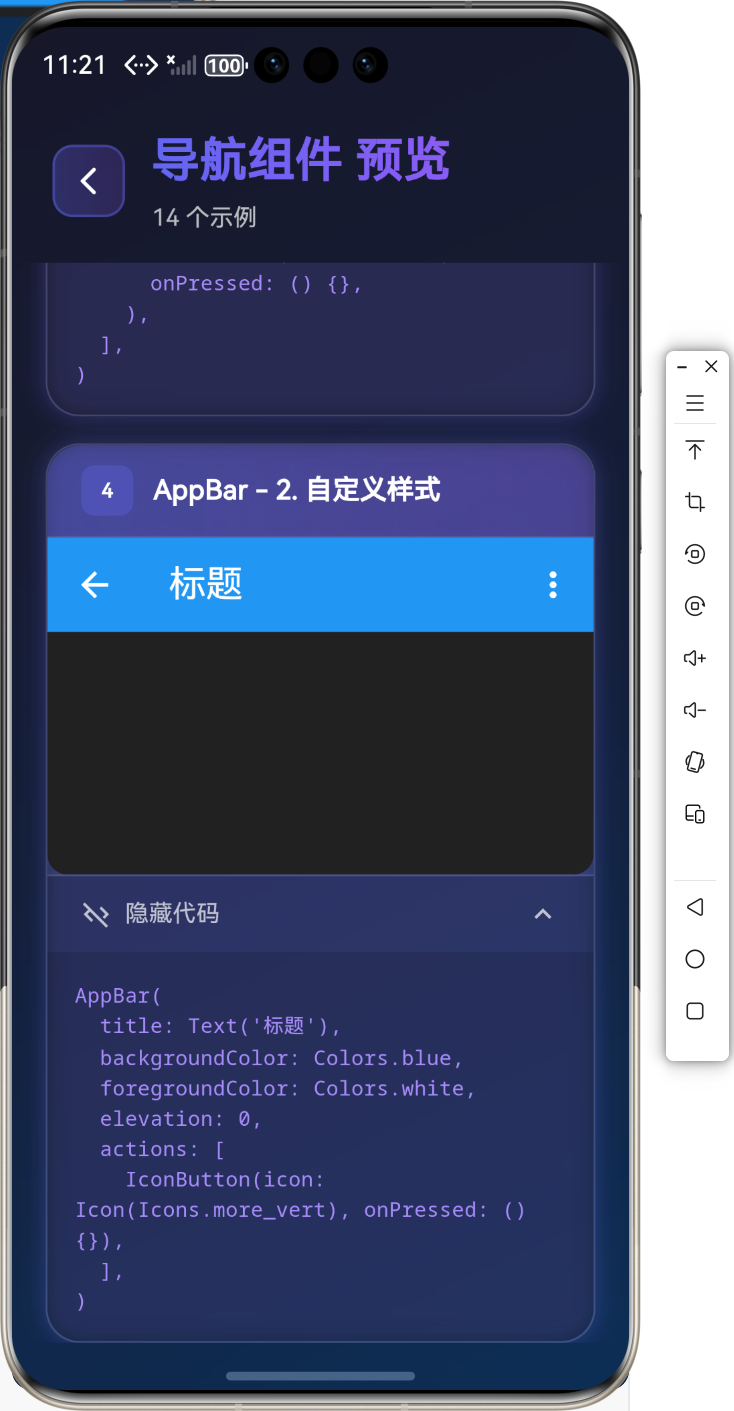
自定义样式
AppBar(
  title: Text('标题'),
  backgroundColor: Colors.blue,
  foregroundColor: Colors.white,
  elevation: 0,
  actions: [
    IconButton(icon: Icon(Icons.more_vert), onPressed: () {}),
  ],
)
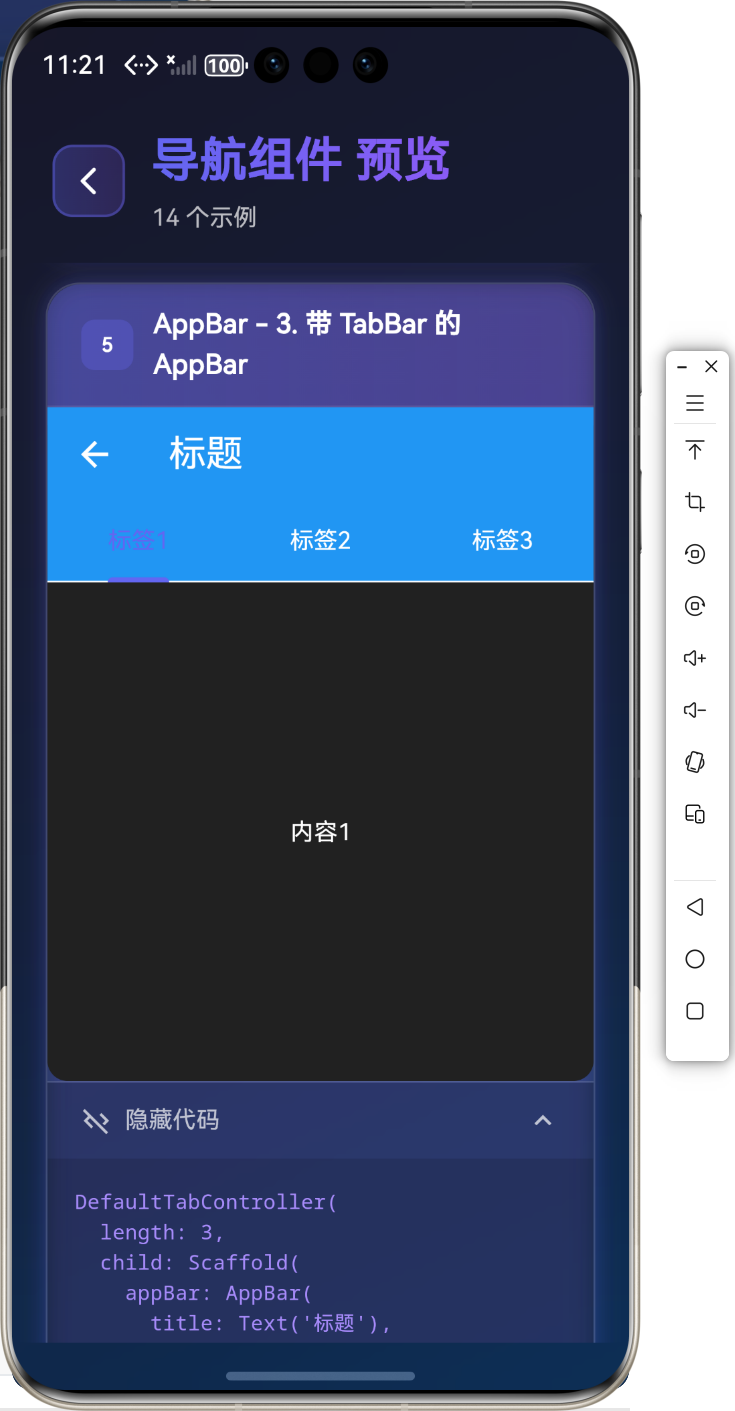
带 TabBar 的 AppBar
DefaultTabController(
  length: 3,
  child: Scaffold(
    appBar: AppBar(
      title: Text('标题'),
      bottom: TabBar(
        tabs: [
          Tab(text: '标签1'),
          Tab(text: '标签2'),
          Tab(text: '标签3'),
        ],
      ),
    ),
    body: TabBarView(
      children: [
        Center(child: Text('内容1')),
        Center(child: Text('内容2')),
        Center(child: Text('内容3')),
      ],
    ),
  ),
)
📍 BottomNavigationBar 组件
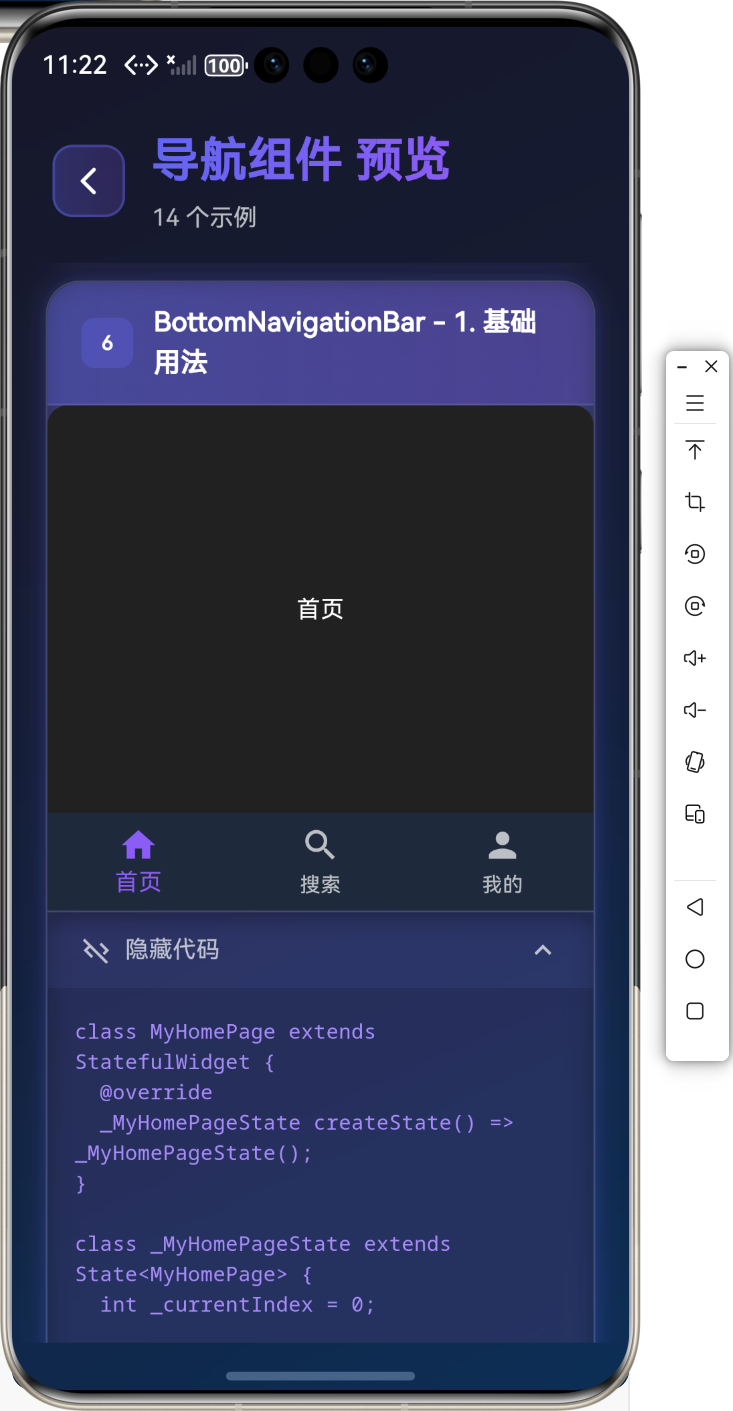
BottomNavigationBar 是底部导航栏,用于主要功能切换。
基础用法
class MyHomePage extends StatefulWidget {
_MyHomePageState createState() => _MyHomePageState();
}
class _MyHomePageState extends State<MyHomePage> {
int _currentIndex = 0;
Widget build(BuildContext context) {
return Scaffold(
body: _getPage(_currentIndex),
bottomNavigationBar: BottomNavigationBar(
currentIndex: _currentIndex,
onTap: (index) {
setState(() {
_currentIndex = index;
});
},
items: [
BottomNavigationBarItem(
icon: Icon(Icons.home),
label: '首页',
),
BottomNavigationBarItem(
icon: Icon(Icons.search),
label: '搜索',
),
BottomNavigationBarItem(
icon: Icon(Icons.person),
label: '我的',
),
],
),
);
}
Widget _getPage(int index) {
switch (index) {
case 0:
return HomePage();
case 1:
return SearchPage();
case 2:
return ProfilePage();
default:
return HomePage();
}
}
}
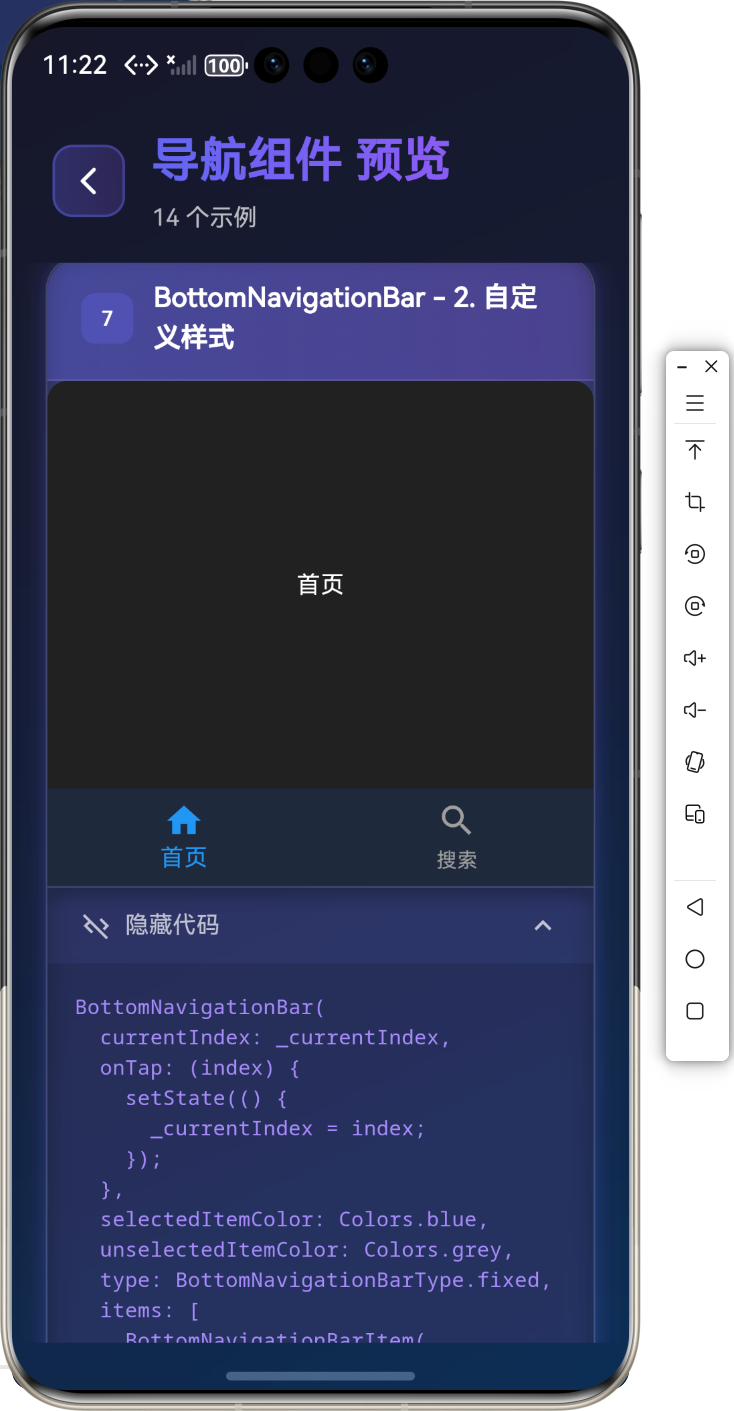
自定义样式
BottomNavigationBar(
  currentIndex: _currentIndex,
  onTap: (index) {
    setState(() {
      _currentIndex = index;
    });
  },
  selectedItemColor: Colors.blue,
  unselectedItemColor: Colors.grey,
  type: BottomNavigationBarType.fixed,
  items: [
    BottomNavigationBarItem(
      icon: Icon(Icons.home),
      label: '首页',
    ),
    BottomNavigationBarItem(
      icon: Icon(Icons.search),
      label: '搜索',
    ),
  ],
)
📑 TabBar 和 TabBarView 组件
TabBar 和 TabBarView 用于创建标签页导航。
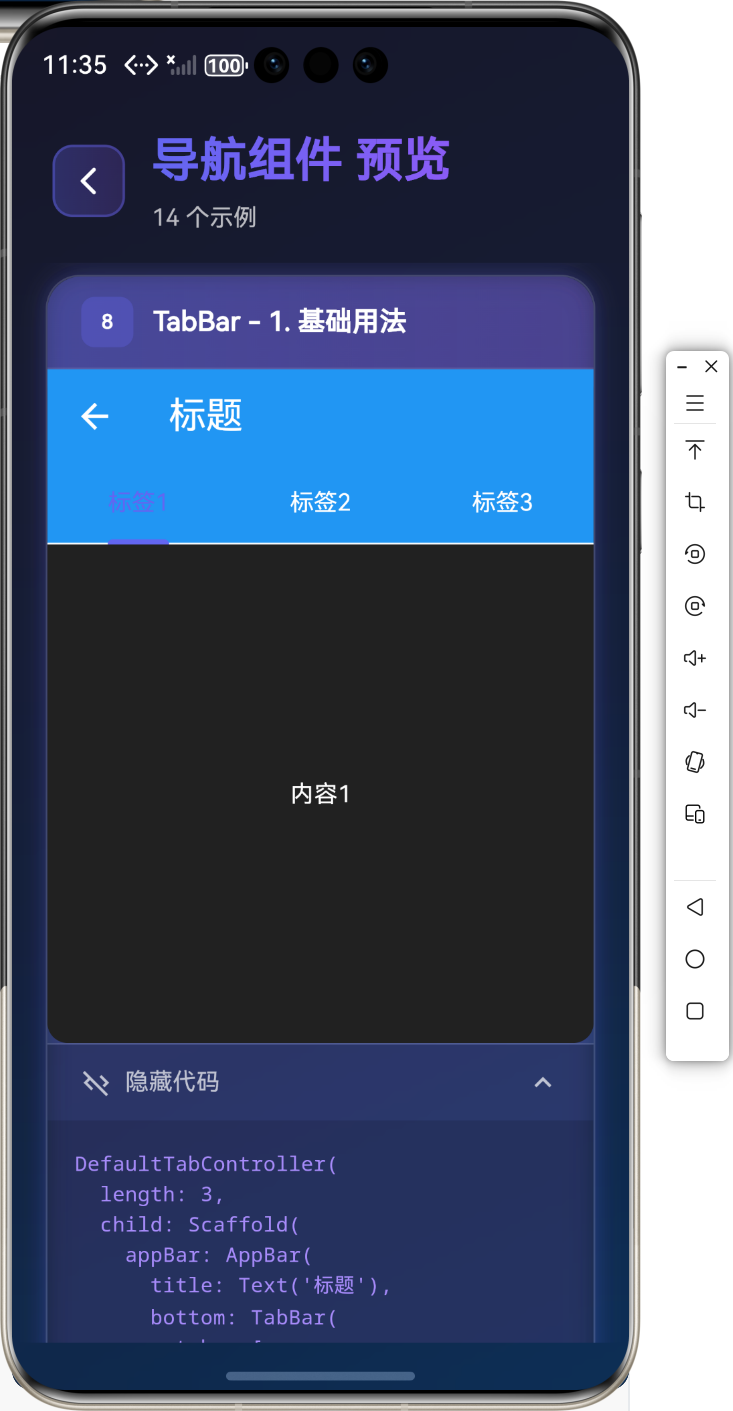
基础用法
DefaultTabController(
  length: 3,
  child: Scaffold(
    appBar: AppBar(
      title: Text('标题'),
      bottom: TabBar(
        tabs: [
          Tab(text: '标签1'),
          Tab(text: '标签2'),
          Tab(text: '标签3'),
        ],
      ),
    ),
    body: TabBarView(
      children: [
        Center(child: Text('内容1')),
        Center(child: Text('内容2')),
        Center(child: Text('内容3')),
      ],
    ),
  ),
)
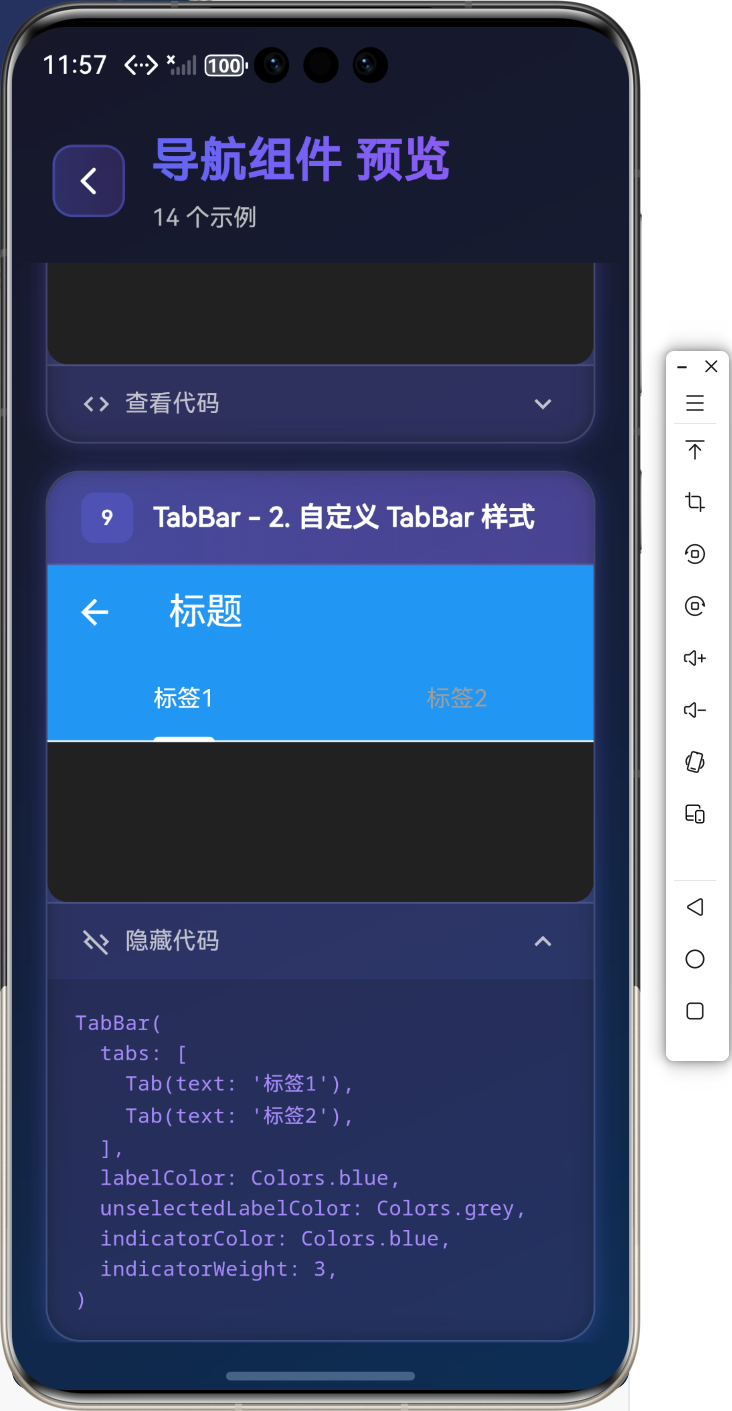
自定义 TabBar 样式
TabBar(
  tabs: [
    Tab(text: '标签1'),
    Tab(text: '标签2'),
  ],
  labelColor: Colors.blue,
  unselectedLabelColor: Colors.grey,
  indicatorColor: Colors.blue,
  indicatorWeight: 3,
)
🗂️ Drawer 组件
Drawer 是侧边抽屉,用于导航菜单和设置。
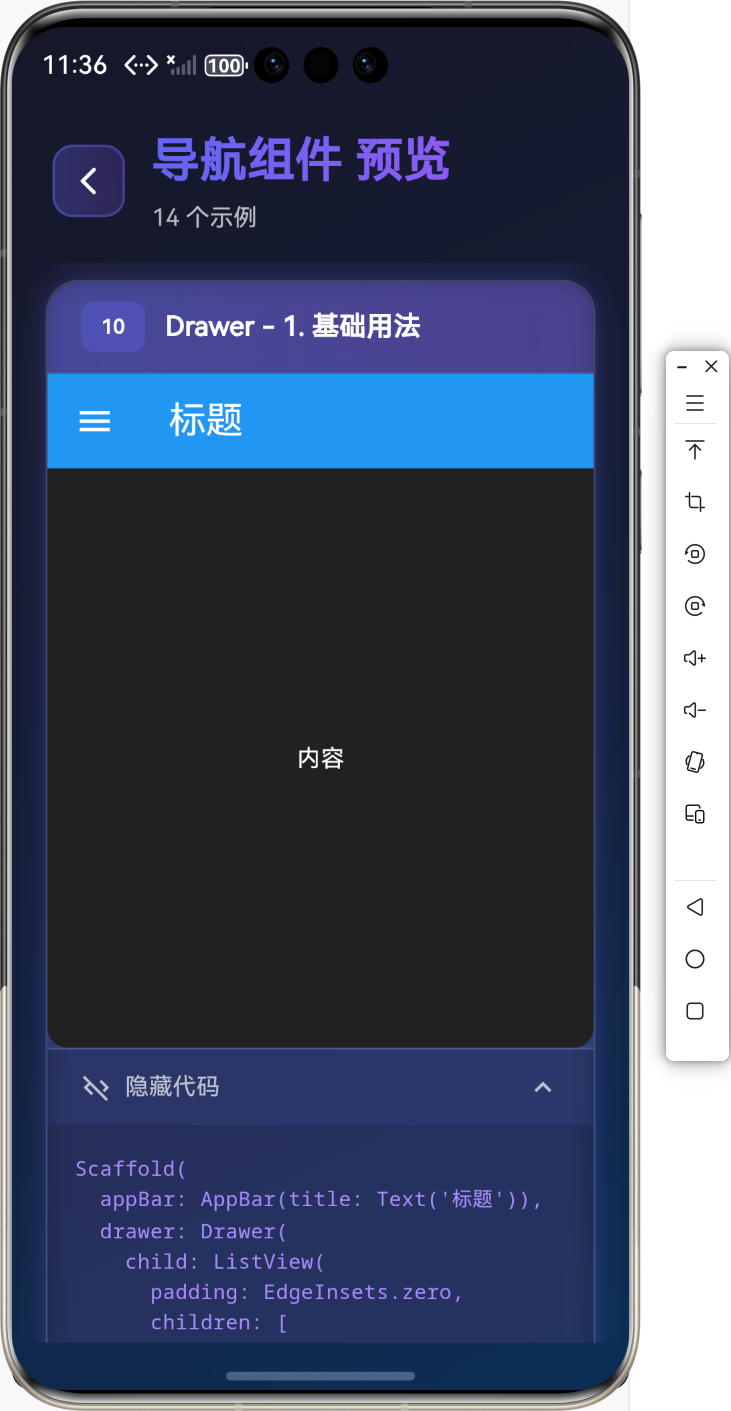
基础用法
Scaffold(
  appBar: AppBar(title: Text('标题')),
  drawer: Drawer(
    child: ListView(
      padding: EdgeInsets.zero,
      children: [
        DrawerHeader(
          decoration: BoxDecoration(color: Colors.blue),
          child: Text('菜单标题'),
        ),
        ListTile(
          leading: Icon(Icons.home),
          title: Text('首页'),
          onTap: () {
            Navigator.pop(context);
          },
        ),
        ListTile(
          leading: Icon(Icons.settings),
          title: Text('设置'),
          onTap: () {
            Navigator.pop(context);
          },
        ),
      ],
    ),
  ),
  body: Center(child: Text('内容')),
)
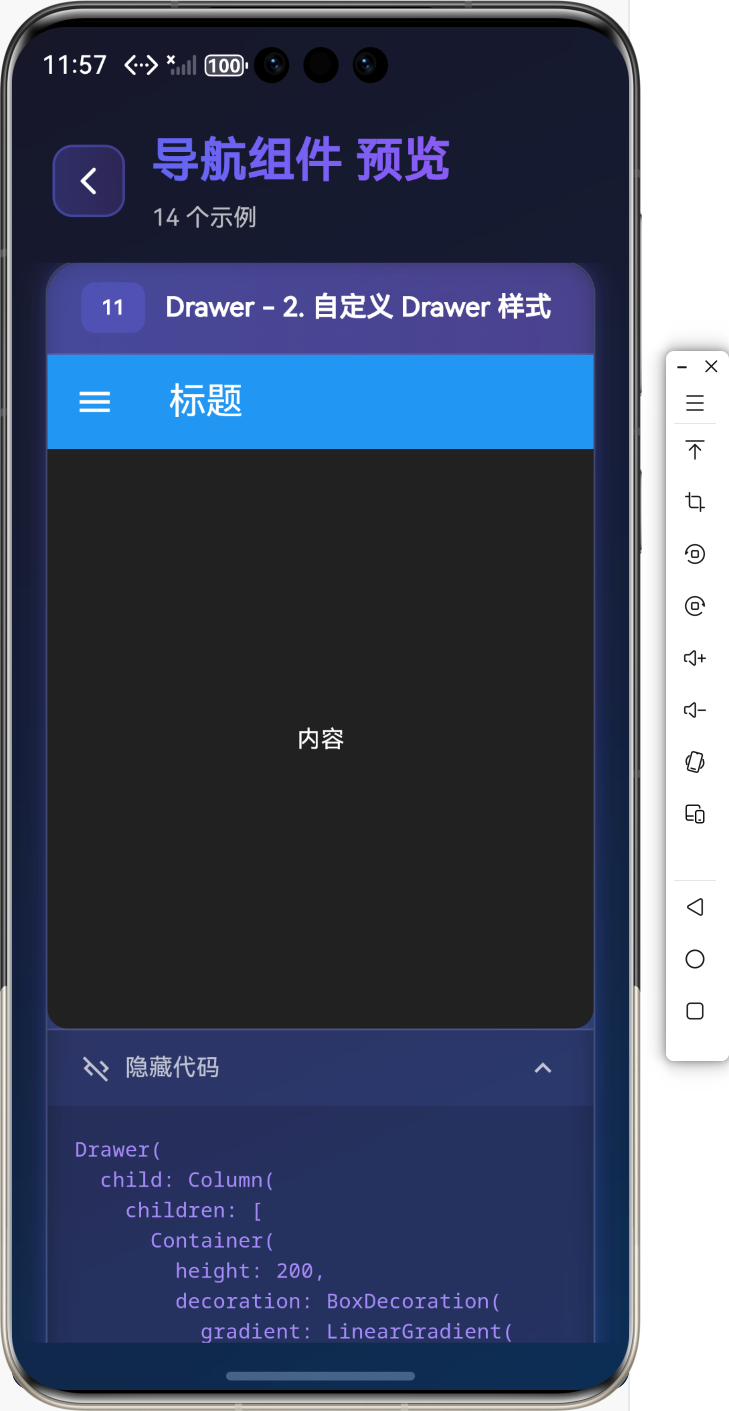
自定义 Drawer 样式
Drawer(
  child: Column(
    children: [
      Container(
        height: 200,
        decoration: BoxDecoration(
          gradient: LinearGradient(
            colors: [Colors.blue, Colors.purple],
          ),
        ),
        child: Center(
          child: Column(
            mainAxisAlignment: MainAxisAlignment.center,
            children: [
              CircleAvatar(
                radius: 40,
                child: Icon(Icons.person, size: 40),
              ),
              SizedBox(height: 16),
              Text('用户名', style: TextStyle(color: Colors.white)),
            ],
          ),
        ),
      ),
      Expanded(
        child: ListView(
          children: [
            ListTile(
              leading: Icon(Icons.home),
              title: Text('首页'),
              onTap: () {},
            ),
            Divider(),
            ListTile(
              leading: Icon(Icons.settings),
              title: Text('设置'),
              onTap: () {},
            ),
          ],
        ),
      ),
    ],
  ),
)
💡 实际应用场景
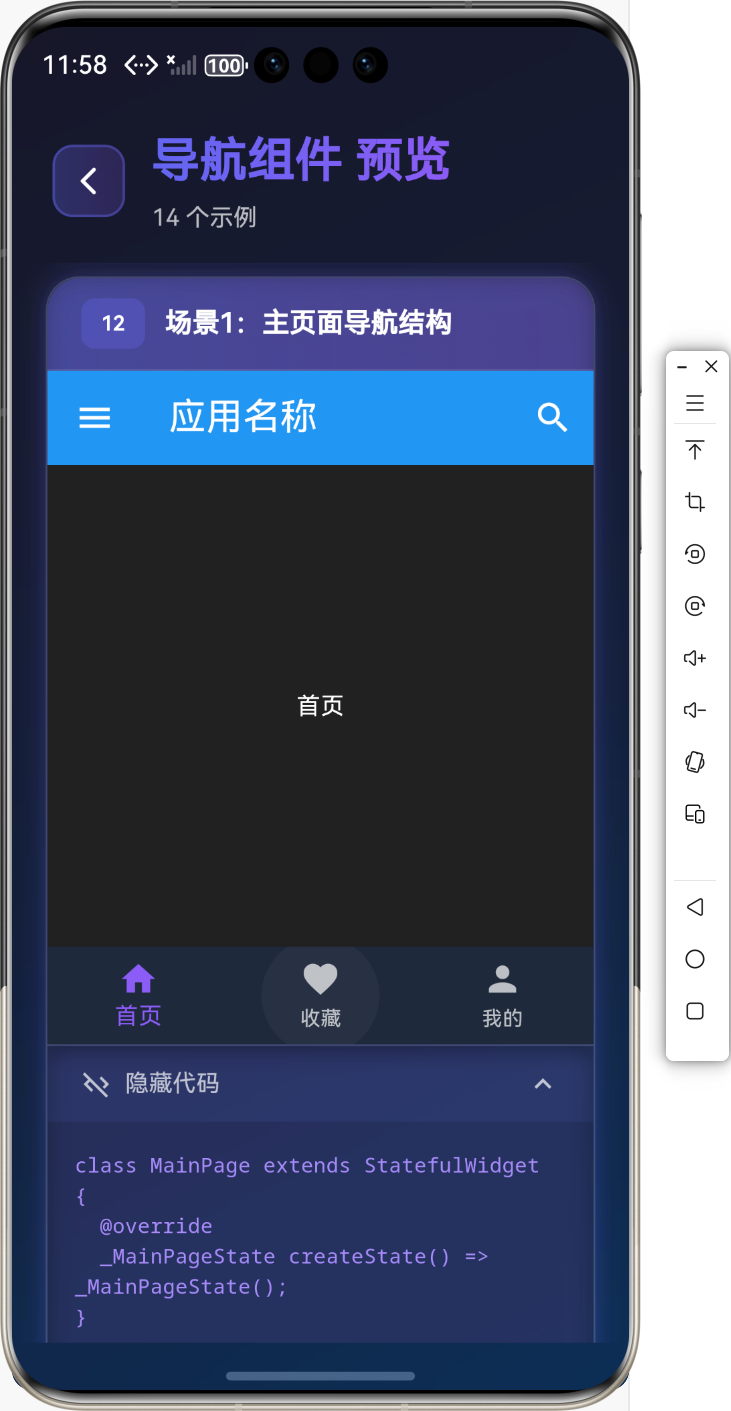
场景1:主页面导航结构
class MainPage extends StatefulWidget {
_MainPageState createState() => _MainPageState();
}
class _MainPageState extends State<MainPage> {
int _currentIndex = 0;
Widget build(BuildContext context) {
return Scaffold(
appBar: AppBar(
title: Text('应用名称'),
actions: [
IconButton(
icon: Icon(Icons.search),
onPressed: () {},
),
],
),
drawer: _buildDrawer(),
body: _getPage(_currentIndex),
bottomNavigationBar: BottomNavigationBar(
currentIndex: _currentIndex,
onTap: (index) {
setState(() {
_currentIndex = index;
});
},
items: [
BottomNavigationBarItem(
icon: Icon(Icons.home),
label: '首页',
),
BottomNavigationBarItem(
icon: Icon(Icons.favorite),
label: '收藏',
),
BottomNavigationBarItem(
icon: Icon(Icons.person),
label: '我的',
),
],
),
);
}
Widget _buildDrawer() {
return Drawer(
child: ListView(
children: [
ListTile(
leading: Icon(Icons.home),
title: Text('首页'),
onTap: () {
Navigator.pop(context);
setState(() {
_currentIndex = 0;
});
},
),
ListTile(
leading: Icon(Icons.settings),
title: Text('设置'),
onTap: () {
Navigator.pop(context);
},
),
],
),
);
}
Widget _getPage(int index) {
switch (index) {
case 0:
return HomePage();
case 1:
return FavoritePage();
case 2:
return ProfilePage();
default:
return HomePage();
}
}
}
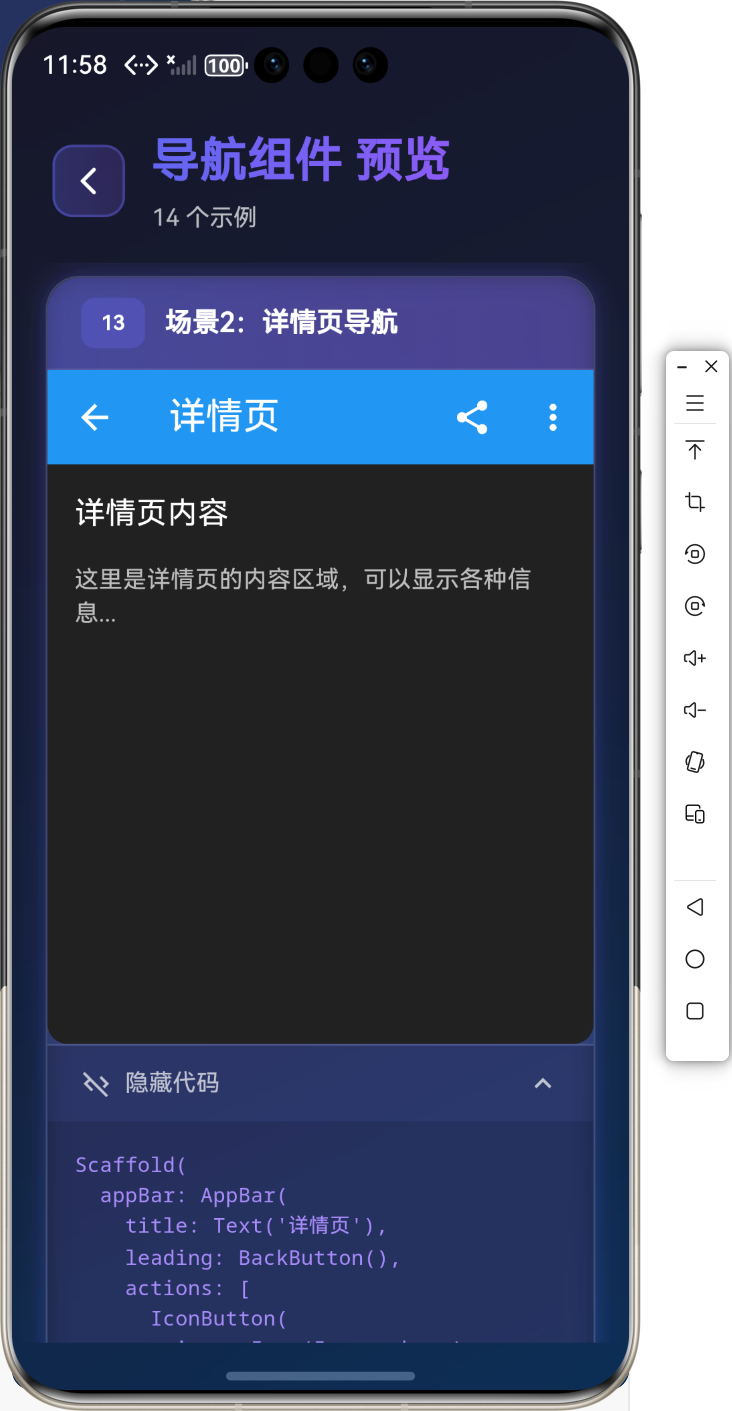
场景2:详情页导航
Scaffold(
  appBar: AppBar(
    title: Text('详情页'),
    leading: BackButton(),
    actions: [
      IconButton(
        icon: Icon(Icons.share),
        onPressed: () {},
      ),
      IconButton(
        icon: Icon(Icons.more_vert),
        onPressed: () {},
      ),
    ],
  ),
  body: SingleChildScrollView(
    child: Column(
      children: [
        // 内容
      ],
    ),
  ),
)
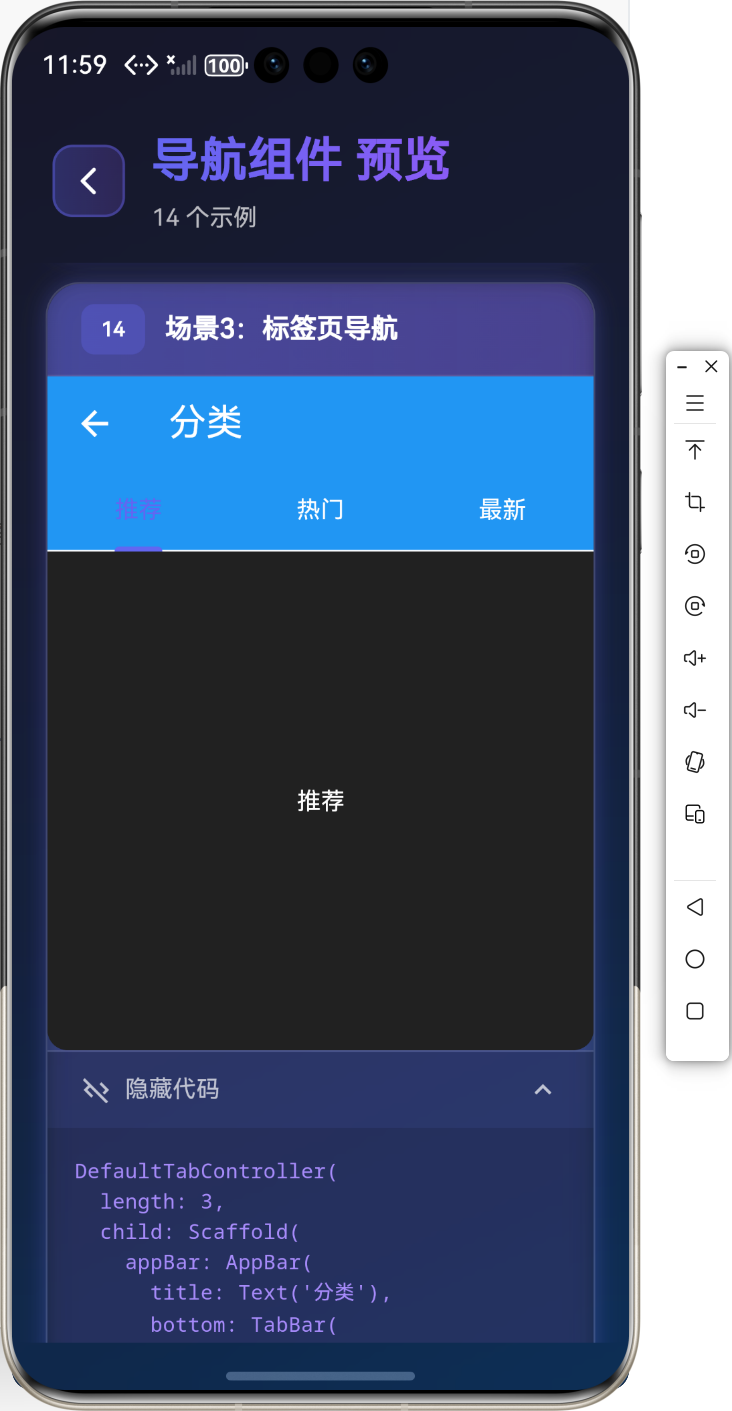
场景3:标签页导航
DefaultTabController(
  length: 3,
  child: Scaffold(
    appBar: AppBar(
      title: Text('分类'),
      bottom: TabBar(
        tabs: [
          Tab(text: '推荐'),
          Tab(text: '热门'),
          Tab(text: '最新'),
        ],
      ),
    ),
    body: TabBarView(
      children: [
        RecommendPage(),
        HotPage(),
        LatestPage(),
      ],
    ),
  ),
)
⚠️ 常见问题与解决方案
问题1:BottomNavigationBar 切换时页面重建
解决方案:
- 使用
IndexedStack保持页面状态 - 使用状态管理库管理页面状态
问题2:TabBar 和 TabBarView 不同步
解决方案:
- 使用
TabController手动控制 - 确保
DefaultTabController的length正确
问题3:Drawer 无法打开
解决方案:
- 确保
Scaffold有drawer属性 - 检查是否有其他组件遮挡
- 使用
Scaffold.of(context).openDrawer()手动打开
💼 最佳实践
1. 导航状态管理
class NavigationState extends ChangeNotifier {
  int _currentIndex = 0;

  int get currentIndex => _currentIndex;

  void changeIndex(int index) {
    _currentIndex = index;
    notifyListeners();
  }
}
2. 统一导航样式
class AppNavigation {
  static AppBar buildAppBar(String title, {List<Widget>? actions}) {
    return AppBar(
      title: Text(title),
      actions: actions,
      elevation: 0,
    );
  }

  static BottomNavigationBar buildBottomNav(
    int currentIndex,
    Function(int) onTap,
  ) {
    return BottomNavigationBar(
      currentIndex: currentIndex,
      onTap: onTap,
      type: BottomNavigationBarType.fixed,
      items: [
        BottomNavigationBarItem(icon: Icon(Icons.home), label: '首页'),
        BottomNavigationBarItem(icon: Icon(Icons.search), label: '搜索'),
        BottomNavigationBarItem(icon: Icon(Icons.person), label: '我的'),
      ],
    );
  }
}
📚 总结
通过本教程,我们学习了:
- ✅
Scaffold页面骨架的使用 - ✅
AppBar顶部导航栏的使用 - ✅
BottomNavigationBar底部导航栏的使用 - ✅
TabBar和TabBarView标签页的使用 - ✅
Drawer侧边抽屉的使用 - ✅ 实际应用场景和最佳实践
导航组件是 Flutter 应用的基础,掌握好这些组件的用法,能够让你的应用导航更加完善和用户友好!
🔗 相关资源
Happy Coding! 🎨✨
欢迎加入开源鸿蒙跨平台社区

作为“人工智能6S店”的官方数字引擎,为AI开发者与企业提供一个覆盖软硬件全栈、一站式门户。
更多推荐

 2
2 0
0- 0


 已为社区贡献21条内容

所有评论(0)