
旅行记录应用智能洞察 - Cordova & OpenHarmony 混合开发实战
本文介绍了开源鸿蒙跨平台开发者社区中智能洞察功能的实现方案。该功能通过机器学习算法分析用户旅行数据,提供个性化推荐。文章详细阐述了三个核心步骤:数据分析与模式识别、推荐与预测、原生层机器学习处理。同时提供了完整的Web代码实现,包括HTML页面结构、生成洞察函数、分析模式函数、生成推荐函数以及渲染卡片和推荐列表的具体实现方法。这些代码示例展示了如何基于用户历史旅行数据(如目的地、时间、花费等)生成
欢迎大家加入开源鸿蒙跨平台开发者社区,一起共建开源鸿蒙跨平台生态。
📌 概述
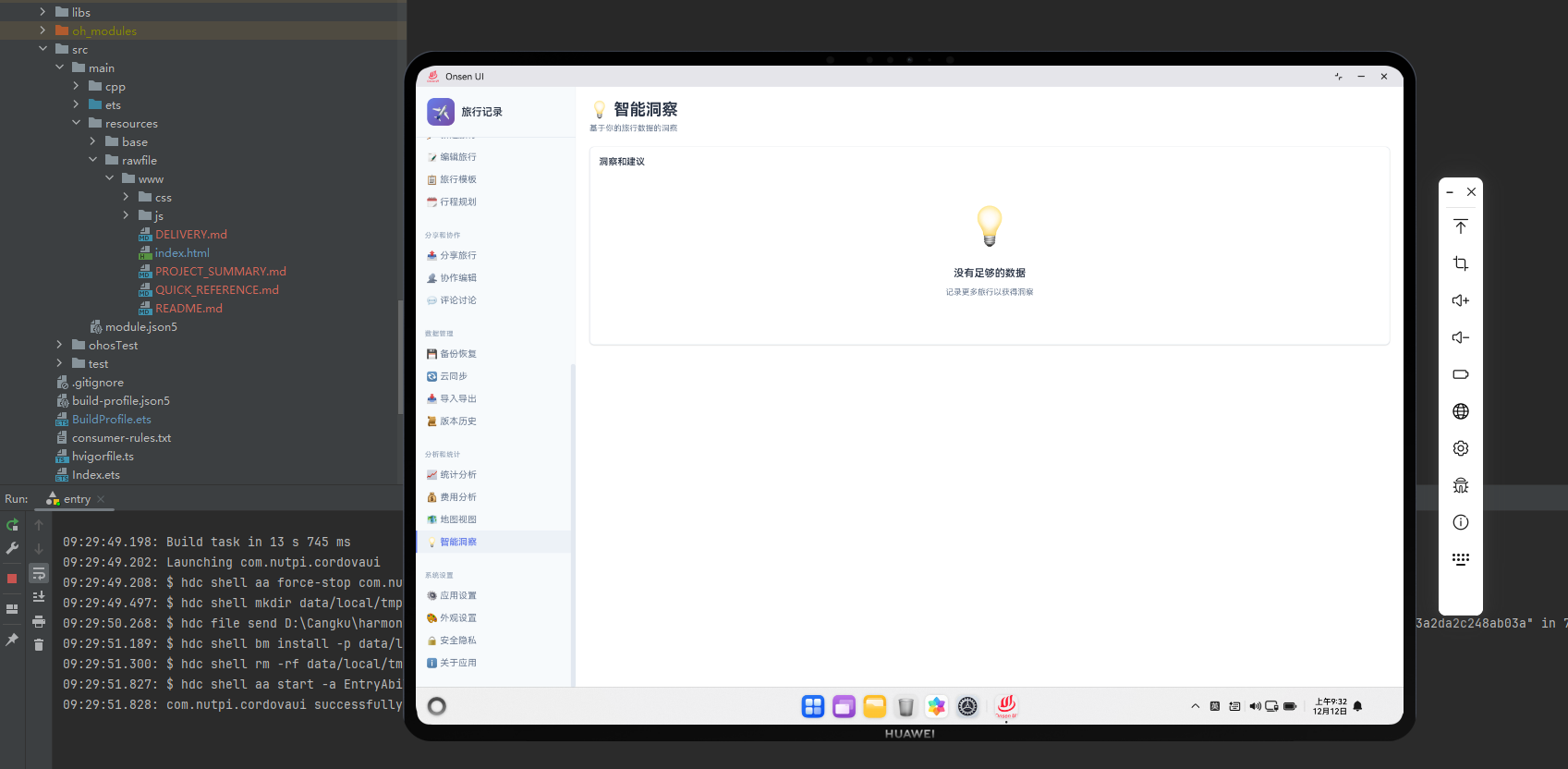
智能洞察功能使用机器学习算法分析旅行数据,为用户提供个性化的建议和洞察。智能洞察可以推荐最佳旅行目的地、预测用户的旅行偏好等。在 Cordova 与 OpenHarmony 的混合开发框架中,智能洞察需要实现数据分析算法和推荐引擎。
🔗 完整流程
第一步:数据分析与模式识别
智能洞察需要分析用户的旅行数据,识别用户的旅行模式。分析包括用户最常去的目的地、最常去的季节、平均花费等。
第二步:推荐与预测
基于用户的旅行模式,智能洞察可以推荐新的目的地、预测用户的下一次旅行时间等。推荐算法需要考虑用户的历史数据和偏好。
第三步:原生层机器学习与数据处理
OpenHarmony 原生层可以实现高性能的数据分析和机器学习算法。
🔧 Web 代码实现
智能洞察页面 HTML 结构
<div id="insights-page" class="page">
    <div class="page-header">
        <h1>智能洞察</h1>
    </div>

    <div class="insights-container">
        <div class="insights-cards" id="insightsCards">
            <!-- 洞察卡片动态加载 -->
        </div>

        <div class="recommendations" id="recommendations">
            <h3>推荐目的地</h3>
            <div class="recommendation-list" id="recommendationList">
                <!-- 推荐列表动态加载 -->
            </div>
        </div>
    </div>
</div>
HTML 结构包含洞察卡片和推荐列表。
生成洞察函数
async function generateInsights() {
    try {
        // 获取所有旅行
        const trips = await db.getAllTrips();

        if (trips.length === 0) {
            showToast('没有足够的数据生成洞察');
            return;
        }

        // 分析旅行模式
        const insights = analyzePatterns(trips);

        // 生成推荐
        const recommendations = generateRecommendations(trips, insights);

        // 渲染洞察卡片
        renderInsightCards(insights);

        // 渲染推荐列表
        renderRecommendations(recommendations);
    } catch (error) {
        console.error('Error generating insights:', error);
        showToast('生成洞察失败');
    }
}
生成洞察函数分析旅行数据并生成推荐。
分析模式函数
function analyzePatterns(trips) {
    const destinations = {};
    const months = {};
    let totalExpense = 0;

    trips.forEach(trip => {
        // 统计目的地
        if (!destinations[trip.destination]) {
            destinations[trip.destination] = 0;
        }
        destinations[trip.destination]++;

        // 统计月份
        const month = new Date(trip.startDate).getMonth();
        if (!months[month]) {
            months[month] = 0;
        }
        months[month]++;

        // 累加花费
        totalExpense += trip.expense || 0;
    });

    // 找出最常去的目的地
    const topDestination = Object.entries(destinations).sort((a, b) => b[1] - a[1])[0];

    // 找出最常去的月份
    const topMonth = Object.entries(months).sort((a, b) => b[1] - a[1])[0];

    return {
        topDestination: topDestination ? topDestination[0] : null,
        topDestinationCount: topDestination ? topDestination[1] : 0,
        topMonth: topMonth ? parseInt(topMonth[0]) : null,
        topMonthCount: topMonth ? topMonth[1] : 0,
        avgExpense: Math.round(totalExpense / trips.length),
        totalTrips: trips.length
    };
}
分析模式函数识别用户的旅行模式。
生成推荐函数
function generateRecommendations(trips, insights) {
    const recommendations = [];

    // 推荐:如果用户经常在特定月份旅行,提醒他们即将到来的月份
    if (insights.topMonth !== null) {
        const monthNames = ['1月', '2月', '3月', '4月', '5月', '6月',
                           '7月', '8月', '9月', '10月', '11月', '12月'];
        recommendations.push({
            type: 'seasonal',
            title: `${monthNames[insights.topMonth]}是您最常旅行的月份`,
            description: `您在${monthNames[insights.topMonth]}有${insights.topMonthCount}次旅行,建议提前规划`
        });
    }

    // 推荐:基于花费模式
    if (insights.avgExpense > 5000) {
        recommendations.push({
            type: 'budget',
            title: '您是高消费旅行者',
            description: `平均每次旅行花费¥${insights.avgExpense},建议制定预算计划`
        });
    }

    return recommendations;
}
生成推荐函数基于用户的旅行模式生成推荐。
渲染洞察卡片函数
function renderInsightCards(insights) {
    const container = document.getElementById('insightsCards');
    container.innerHTML = '';

    const cards = [
        {
            title: '总旅行数',
            value: insights.totalTrips,
            icon: '🌍'
        },
        {
            title: '平均花费',
            value: `¥${insights.avgExpense}`,
            icon: '💰'
        },
        {
            title: '最常去的目的地',
            value: insights.topDestination || '未知',
            icon: '📍'
        }
    ];

    cards.forEach(card => {
        const cardElement = document.createElement('div');
        cardElement.className = 'insight-card';
        cardElement.innerHTML = `
            <div class="card-icon">${card.icon}</div>
            <div class="card-content">
                <h4>${card.title}</h4>
                <p>${card.value}</p>
            </div>
        `;
        container.appendChild(cardElement);
    });
}
渲染洞察卡片函数展示洞察信息。
渲染推荐列表函数
function renderRecommendations(recommendations) {
    const container = document.getElementById('recommendationList');
    container.innerHTML = '';

    recommendations.forEach(rec => {
        const item = document.createElement('div');
        item.className = 'recommendation-item';
        item.innerHTML = `
            <h4>${rec.title}</h4>
            <p>${rec.description}</p>
        `;
        container.appendChild(item);
    });
}
渲染推荐列表函数展示推荐信息。
🔌 OpenHarmony 原生代码实现
智能洞察插件
// InsightsPlugin.ets
import { BusinessError } from '@ohos.base';

export class InsightsPlugin {
    // 处理洞察生成事件
    onInsightsGenerated(args: any, callback: Function): void {
        try {
            const insightCount = args[0].insightCount;

            console.log(`[Insights] Generated ${insightCount} insights`);

            callback({ success: true, message: '洞察已生成' });
        } catch (error) {
            callback({ success: false, error: error.message });
        }
    }
}
智能洞察插件处理洞察生成。
📝 总结
智能洞察功能展示了如何在 Cordova 与 OpenHarmony 框架中实现一个数据分析和推荐系统。Web 层负责数据分析和 UI 展示,原生层负责高性能数据处理。通过智能洞察,用户可以获得个性化的旅行建议。
作为“人工智能6S店”的官方数字引擎,为AI开发者与企业提供一个覆盖软硬件全栈、一站式门户。
更多推荐


 15
15 0
0- 0


 已为社区贡献12条内容

所有评论(0)