
参数验证_Flutter在鸿蒙平台确保路由参数类型安全
·
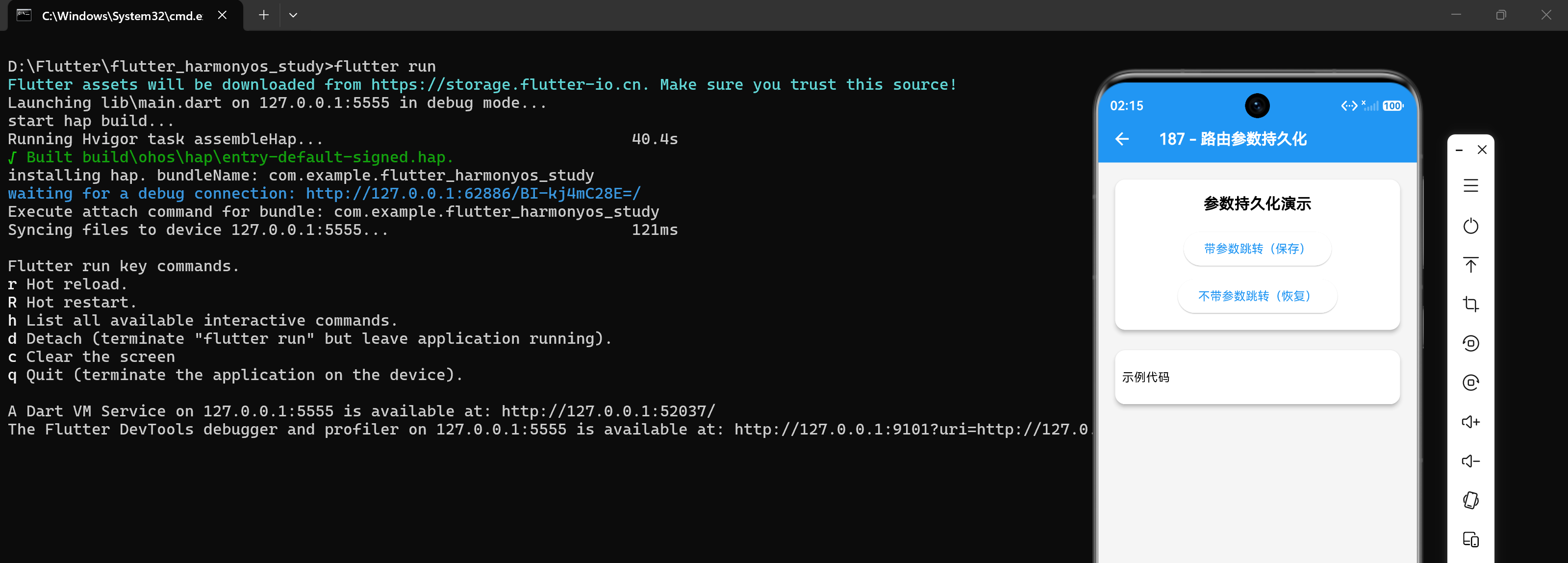
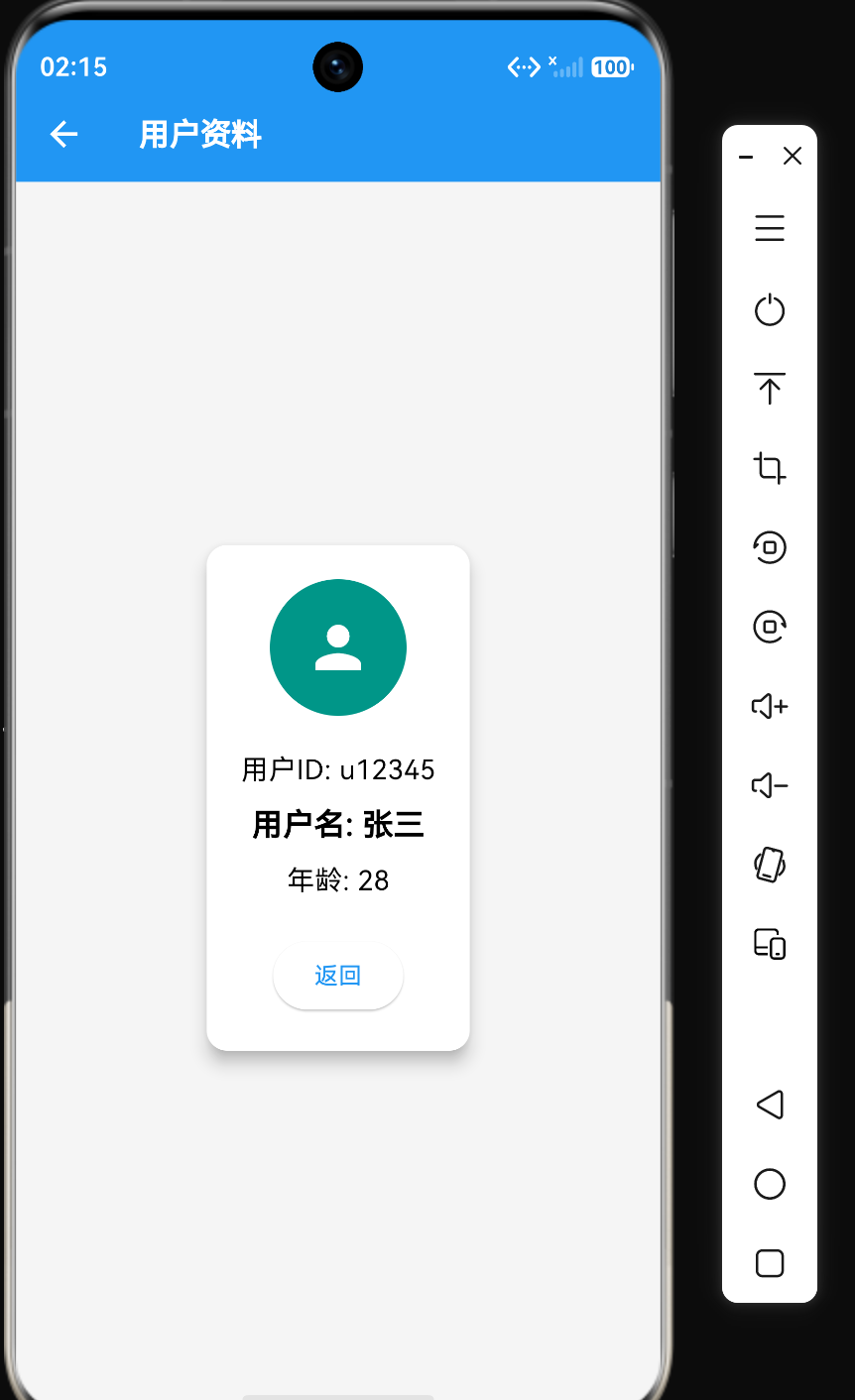
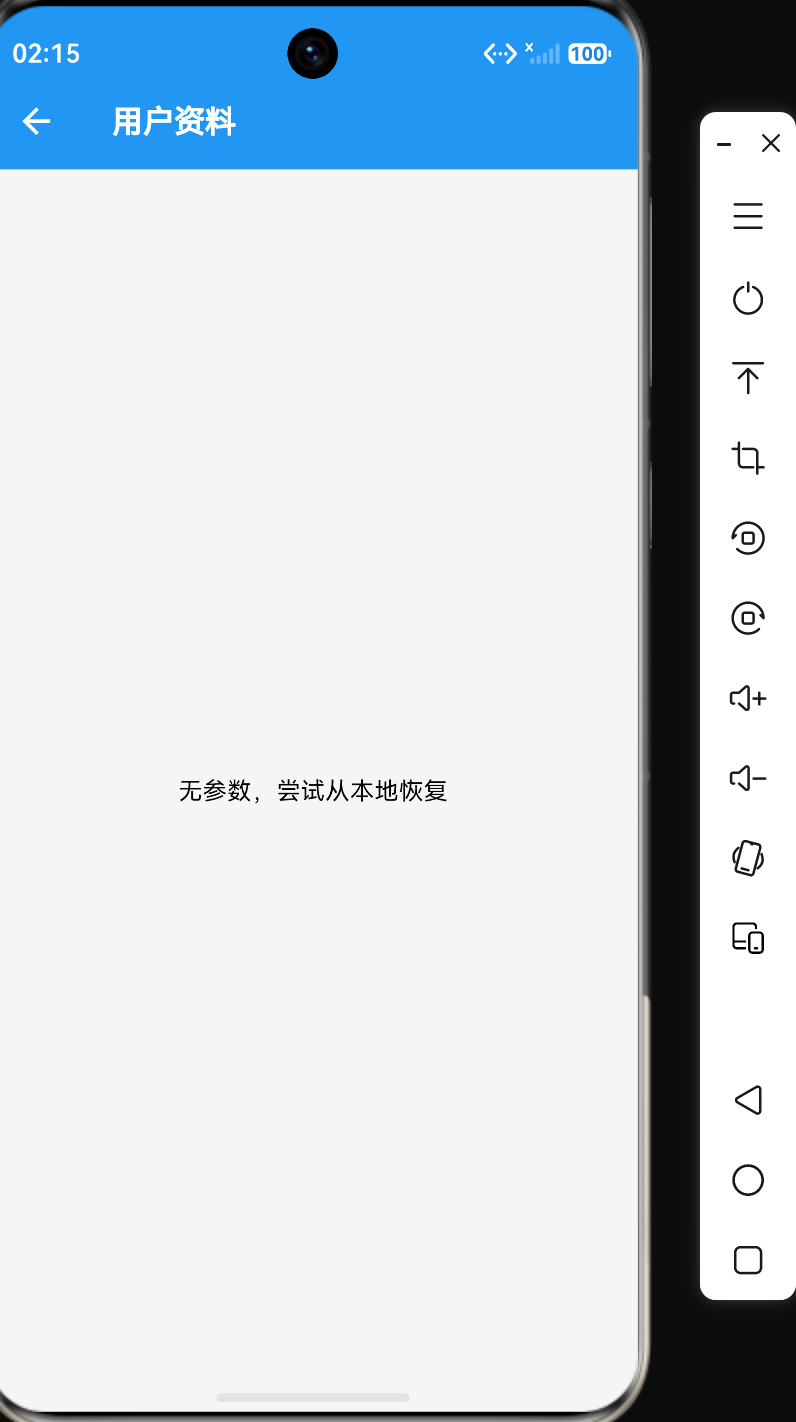
概述
路由传参容易出现类型错误和参数缺失问题。为了提高代码的可靠性和可维护性,我们需要建立类型安全的传参机制。
核心概念
类型安全的重要性
类型安全是指在编译时检查数据类型的正确性,避免运行时出现类型转换错误。在路由传参中,类型安全可以:
- 避免参数类型错误导致的运行时异常
- 提供 IDE 自动补全和类型提示
- 提高代码的可读性和可维护性
参数验证的必要性
参数验证是指在使用参数之前,检查参数是否存在、是否符合预期格式。这可以:
- 避免空指针异常
- 确保参数符合业务规则
- 提供清晰的错误信息
代码实现
基础示例
方式一:使用类封装参数
class ProfileParams {
  final String userId;
  final String userName;
  final int age;

  const ProfileParams({
    required this.userId,
    required this.userName,
    this.age = 0,
  });

  factory ProfileParams.fromMap(Map<String, dynamic> map) {
    return ProfileParams(
      userId: map["userId"] as String,
      userName: map["userName"] as String,
      age: map["age"] as int? ?? 0,
    );
  }
}
在上面的代码中,我们定义了一个 ProfileParams 类来封装参数,并提供了 fromMap 工厂方法来从 Map 中解析参数。
使用封装的参数类
void navigateWithParams(BuildContext context) {
  final params = const ProfileParams(
    userId: "u12345",
    userName: "张三",
    age: 28,
  );
  Navigator.pushNamed(context, "/profile", arguments: params);
}
方式二:使用路由工具类
class RouteUtils {
  static void pushProfile(BuildContext context, {
    required String userId,
    required String userName,
    int age = 0,
  }) {
    Navigator.pushNamed(
      context,
      "/profile",
      arguments: ProfileParams(userId: userId, userName: userName, age: age),
    );
  }
}
通过路由工具类,我们可以提供类型安全的导航方法。
方式三:使用 extension 封装获取参数
extension RouteParamsExtension on BuildContext {
ProfileParams get profileParams {
final args = ModalRoute.of(this)?.settings.arguments;
if (args is ProfileParams) {
return args;
}
throw ArgumentError("ProfileParams required");
}
}
// 使用扩展获取参数
class SafeProfilePage extends StatelessWidget {
const SafeProfilePage({super.key});
Widget build(BuildContext context) {
final params = context.profileParams;
return Scaffold(
appBar: AppBar(title: const Text("用户资料")),
body: Center(child: Text("用户: " + params.userName)),
);
}
}
实际应用场景
场景一:参数验证
在使用参数之前,我们需要验证参数是否符合预期。
class ValidatedParams {
  final String userId;
  final String userName;
  final int age;

  const ValidatedParams({
    required this.userId,
    required this.userName,
    required this.age,
  });

  factory ValidatedParams.fromMap(Map<String, dynamic> map) {
    // 验证必需参数
    if (map["userId"] == null || map["userId"].isEmpty) {
      throw ArgumentError("userId is required");
    }
    if (map["userName"] == null || map["userName"].isEmpty) {
      throw ArgumentError("userName is required");
    }

    // 验证参数类型
    if (map["userId"] is! String) {
      throw ArgumentError("userId must be a String");
    }
    if (map["age"] != null && map["age"] is! int) {
      throw ArgumentError("age must be an int");
    }

    return ValidatedParams(
      userId: map["userId"],
      userName: map["userName"],
      age: map["age"] as int? ?? 0,
    );
  }
}
场景二:默认值处理
对于可选参数,我们需要提供合理的默认值。
class ParamsWithDefaults {
  final String userId;
  final String userName;
  final int age;
  final String status;
  final bool isActive;

  const ParamsWithDefaults({
    required this.userId,
    required this.userName,
    this.age = 0,
    this.status = "active",
    this.isActive = true,
  });

  factory ParamsWithDefaults.fromMap(Map<String, dynamic> map) {
    return ParamsWithDefaults(
      userId: map["userId"] ?? "",
      userName: map["userName"] ?? "",
      age: map["age"] ?? 0,
      status: map["status"] ?? "active",
      isActive: map["isActive"] ?? true,
    );
  }
}
进阶用法
使用泛型扩展
通过泛型扩展,我们可以创建通用的参数获取方法。
extension GenericRouteParams on BuildContext {
  T getArgs<T>() {
    final args = ModalRoute.of(this)?.settings.arguments;
    if (args is T) {
      return args;
    }
    throw ArgumentError("Required argument of type $T not found");
  }

  T? getArgsOrNull<T>() {
    final args = ModalRoute.of(this)?.settings.arguments;
    return args is T ? args : null;
  }

  T getArgsWithDefault<T>(T defaultValue) {
    final args = ModalRoute.of(this)?.settings.arguments;
    return args is T ? args : defaultValue;
  }
}

void useGenericExtension(BuildContext context) {
  // 获取非空参数
  final userId = context.getArgs<String>();

  // 获取可空参数
  final userName = context.getArgsOrNull<String>();

  // 获取带默认值的参数
  final age = context.getArgsWithDefault<int>(0);
}
使用 codegen 生成参数类
对于复杂的参数类,我们可以使用代码生成工具来简化代码。
// 添加依赖到 pubspec.yaml
// dependencies:
// freezed_annotation: ^2.4.1
// dev_dependencies:
// build_runner: ^2.4.6
// freezed: ^2.4.1
// 使用 freezed 生成参数类
import 'package:freezed_annotation/freezed_annotation.dart';
part 'profile_params.freezed.dart';
class ProfileParams with _$ProfileParams {
const factory ProfileParams({
required String userId,
required String userName,
(0) int age,
}) = _ProfileParams;
// 从 JSON 创建
factory ProfileParams.fromJson(Map<String, dynamic> json) =>
_$ProfileParamsFromJson(json);
}
注意事项
错误处理
当参数缺失或类型错误时,应该抛出明确的错误信息。
// 正确:抛出明确的错误信息
extension SafeRouteParams on BuildContext {
  ProfileParams get safeParams {
    final args = ModalRoute.of(this)?.settings.arguments;
    if (args is ProfileParams) {
      return args;
    }
    throw ArgumentError(
      "Invalid arguments for ProfilePage. "
      "Expected ProfileParams, got ${args.runtimeType}",
    );
  }
}

// 错误:静默失败
extension UnsafeRouteParams on BuildContext {
  ProfileParams get unsafeParams {
    final args = ModalRoute.of(this)?.settings.arguments;
    return args as ProfileParams; // 可能抛出类型转换错误
  }
}
参数版本兼容
当参数结构发生变化时,需要考虑版本兼容。
class VersionedParams {
  final String userId;
  final String userName;
  final int age;
  final String? email; // 新增字段,可为空

  const VersionedParams({
    required this.userId,
    required this.userName,
    this.age = 0,
    this.email,
  });

  factory VersionedParams.fromMap(Map<String, dynamic> map) {
    return VersionedParams(
      userId: map["userId"] ?? "",
      userName: map["userName"] ?? "",
      age: map["age"] ?? 0,
      email: map["email"], // 新字段,可能不存在
    );
  }
}
避免过度封装
虽然类型安全很重要,但过度封装会增加代码复杂度。
// 简单场景:直接使用 Map
void simpleNavigate(BuildContext context) {
  Navigator.pushNamed(
    context,
    "/simple",
    arguments: {"id": "1", "name": "test"},
  );
}

// 复杂场景:使用封装类
void complexNavigate(BuildContext context) {
  final params = const ComplexParams(id: "1", name: "test", value: 100);
  Navigator.pushNamed(context, "/complex", arguments: params);
}
对比其他方案
| 方案 | 优点 | 缺点 | 适用场景 |
|---|---|---|---|
| 直接使用 Map | 简单直接 | 类型不安全 | 简单场景、临时方案 |
| 使用封装类 | 类型安全、可验证 | 需要额外定义类 | 复杂场景、生产环境 |
| 使用 codegen | 自动生成代码 | 需要配置工具 | 大型项目、复杂参数 |
总结
参数验证与类型安全是保证路由传参可靠性的关键。通过使用封装类、扩展方法和代码生成工具,我们可以建立类型安全的传参机制。
在实际开发中,我们应该:
- 使用封装类:将相关参数封装到一个类中
- 添加验证逻辑:在使用参数之前进行验证
- 提供默认值:处理可选参数的默认情况
- 抛出明确错误:当参数不符合预期时抛出清晰的错误信息
- 避免过度封装:根据场景选择合适的方案
掌握类型安全的传参机制,是开发高质量 Flutter 应用的必备技能。

作为“人工智能6S店”的官方数字引擎,为AI开发者与企业提供一个覆盖软硬件全栈、一站式门户。
更多推荐


 1
1 0
0- 0


 已为社区贡献4条内容

所有评论(0)