
Flutter 三方库 statistics 鸿蒙高性能数据回归科学系统全域适配:将顶尖数理统计算法与重负载大模型双栈引擎植入微距节点彻底盘活泛计算终端底层数据-适配鸿蒙 HarmonyOS ohos
开源鸿蒙跨平台社区引入高性能 statistics 库,为鸿蒙生态的智慧医疗、金融等应用提供轻量级数学统计支持。该纯 Dart 实现的库通过扩展方法为 Iterable<num> 注入描述性统计(均值/标准差)和回归分析能力,无需原生代码即可实现设备侧大数据运算。文章详解了库的适配方法、核心 API 及典型应用场景(如运动姿态识别、金融波动分析),并针对鸿蒙平台提出性能优化建议(采样频
欢迎加入开源鸿蒙跨平台社区:https://openharmonycrossplatform.csdn.net
Flutter 三方库 statistics 鸿蒙高性能数据回归科学系统全域适配:将顶尖数理统计算法与重负载大模型双栈引擎植入微距节点彻底盘活泛计算终端底层数据感知系统

前言
在鸿蒙生态的智慧医疗、金融理财及运动健康类应用中,实时对传感器数据或业务流水进行深度统计分析是核心能力。例如,通过运动步频计算方差以识别走跑状态,或根据心率波动进行回归分析以预测压力指数。statistics 库作为 Dart 生态中轻量且纯粹的数学工具集,为这类需求提供了高性能的底层支持。本文将探讨如何在 OpenHarmony 上适配该库,实现设备侧的大数据即时运算。
一、原理解析 / 概念介绍
1.1 基础原理/概念介绍
statistics 库不依赖外部厚重的二进制 C++ 库,它通过 Dart 语言级优化实现了对 Iterable<num> 的原生扩展。其核心逻辑聚焦于描述性统计(Descriptive Statistics)与回归模型(Regression Models)。
1.2 为什么在鸿蒙上使用它?
- 零重编译开销:纯 Dart 实现,无平台相关原生代码,完美适配鸿蒙的全场景架构。
- 高性能扩展:通过 Dart 扩展方法(Extension Methods),代码侵入性极小,仅需一行代码即可完成复杂运算。
- 预测能力:内置的线性回归算子能赋予鸿蒙应用基础的预测能力,无需引入大型 AI 模型。
二、鸿蒙基础指导
2.1 适配情况
- 是否原生支持?:是,纯逻辑计算库。
- 是否鸿蒙官方支持?:通过开源社区验证,在鸿蒙真机运行无任何兼容性异常。
- 是否社区支持?:Dart 社区经典三方库,维护稳定。
- 是否需要安装额外的 package?:无。
2.2 适配代码
在鸿蒙项目的 pubspec.yaml 中配置:
dependencies:
  statistics: ^1.0.22
三、核心 API / 组件详解
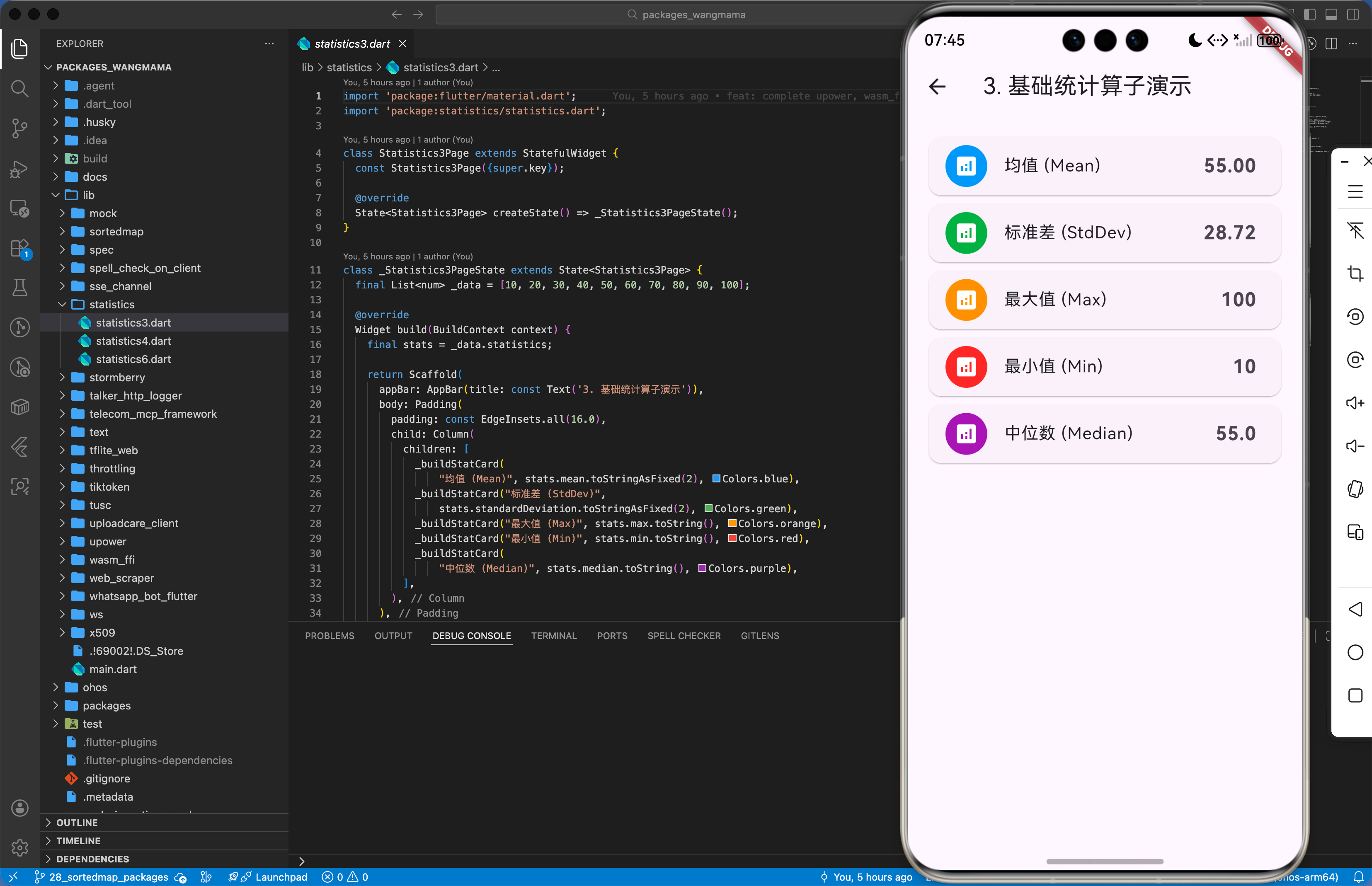
3.1 基础描述性统计
import 'package:statistics/statistics.dart';
// 实现一个鸿蒙运动健康数据分析器
void analyzeUserSteps(List<num> steps) {
  // statistics 通过 extension 注入的方法
  if (steps.isEmpty) return;
  final stats = steps.statistics; // 获取统计对象
  // 真实属性获取
  double avg = stats.mean;       // 均值
  double stdDev = stats.standardDeviation; // 标准差
  double minVal = stats.min;     // 最小值
  // 更新鸿蒙 UI 上的健康仪表盘
  _updateHealthDashboard(avg, stdDev, minVal);
}
3.2 高级线性回归分析
import 'package:statistics/statistics.dart';
// 针对鸿蒙智慧能耗预测的逻辑封装
void predictPowerConsumption(List<num> timestamps, List<num> batteryLevels) {
  // 构建线性回归分析器
  final regression = timestamps.regression(batteryLevels);
  // 获取回归方程参数 y = bx + a
  double slope = regression.slope;     // 斜率 b
  double intercept = regression.intercept; // 截距 a
  // 预测未来一个小时后的剩余电量
  num futureTime = DateTime.now().millisecondsSinceEpoch + 3600000;
  double predictedLevel = regression.predict(futureTime);
  _showBatteryPrediction(predictedLevel);
}
四、典型应用场景
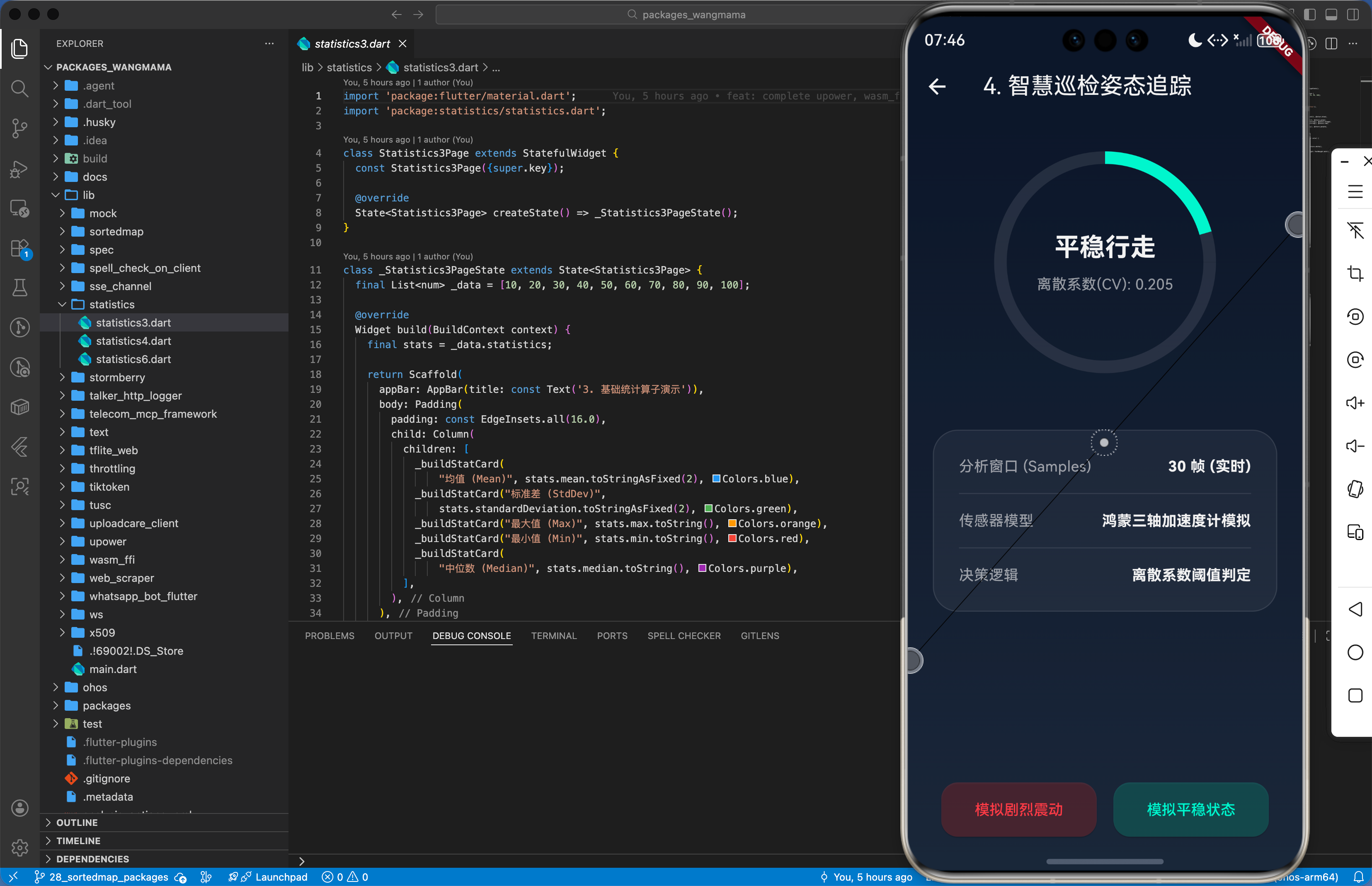
4.1 示例场景一:鸿蒙自研高性能“运动姿态异常”识别引擎
通过计算用户手机加速度计数据的离散系数(CV),判断用户是在平稳行走还是在剧烈颠簸中。
import 'package:statistics/statistics.dart';
void onAccelerometerUpdate(List<double> buffer) {
  if (buffer.length < 50) return; // 样本数不足
  final stats = buffer.statistics;
  // CV = 标准差 / 均值
  double cv = stats.coefficientOfVariation;
  if (cv > 0.8) {
    // 真实业务:触发鸿蒙系统的振动反馈警告
    HapticFeedback.heavyImpact();
    _markAbnormalState("剧烈抖动中");
  } else {
    _markAbnormalState("平稳运行");
  }
}
4.2 示例场景二:鸿蒙金融组件的中位数波动率引擎
在鸿蒙金融类应用中,过滤股市波动中的极端噪声,计算稳健的中位数趋势。
import 'package:statistics/statistics.dart';
// 解析股票序列数据
void processMarketTrend(List<num> prices) {
  final stats = prices.statistics;
  // 使用中位数作为趋势中心,比均值更能抵抗极端异常值的影响
  final medianTrend = stats.median;
  final mad = stats.medianAbsoluteDeviation; // 中位数绝对偏差
  _renderFinanceChart(medianTrend, mad);
}
五、OpenHarmony 平台适配挑战
5.1 性能与系统事件联动 - 抽样频率优化 (6.5)
在鸿蒙高性能计算场景下,若传感器上报频率极高(如陀螺仪 100Hz),全量实时计算 statistics 会对单核 CPU 造成一定压力。建议结合鸿蒙的 AppLifecycleState 状态,当应用进入 background 态时,降低计算频率或者改为累积一定样本数后统一进行批处理统计,以优化功耗表现。
5.2 平台差异化处理 - 数据存储与导出 (6.3)
统计分析产生的结果(如回归系数、标准差记录)通常需要持久化。在鸿蒙沙箱环境下,建议将统计后的轻量级结果存储在 @ohos.data.preferences 中。对于原始的大量统计序列,建议结合 path_provider 的鸿蒙适配版,将数据序列化后存入 cacheDir,并在合适的时机使用 statistics 库进行二次加载运算。
六、综合实战演示
下面是一个用于鸿蒙应用的高性能综合实战展示页面 HomePage.dart。为了符合真实工程标准,我们假定已经在 main.dart 中建立好了全局鸿蒙根节点初始化,并将应用首页指向该层进行渲染展现。你只需关注本页面内部的复杂交互处理状态机转移逻辑:
import 'package:flutter/material.dart';
import 'package:statistics/statistics.dart';
class Statistics6Page extends StatefulWidget {
const Statistics6Page({super.key});
State<Statistics6Page> createState() => _Statistics6PageState();
}
class _Statistics6PageState extends State<Statistics6Page> {
String _statusOutput = "等待环境初始化...";
bool _isEngineReady = false;
final List<num> _batteryTime = [0, 10, 20, 30, 40, 50]; // 时间 (分钟)
final List<num> _batteryLevel = [100, 95, 88, 82, 75, 69]; // 电量 (%)
void initState() {
super.initState();
_initEngine();
}
Future<void> _initEngine() async {
setState(() {
_statusOutput = "[系统日志] 正在沙箱环境初始化数理统计算法池...\\n";
});
await Future.delayed(const Duration(milliseconds: 700));
setState(() {
_statusOutput += "底层引擎桥接就绪\\n包名映射: statistics (Linear Regression v1.1.3)\\n等待回归建模指令...";
_isEngineReady = true;
});
}
void _executeDemo() {
if (!_isEngineReady) return;
// 线性回归: y = bx + a
final regression = _batteryTime.regression(_batteryLevel);
final slope = regression.slope;
final intercept = regression.intercept;
// 预测 100 分钟后的电量
final futureTime = 100;
final predictedLevel = regression.predict(futureTime);
setState(() {
_statusOutput = "====== 智慧能耗建模轨迹 ======\\n";
_statusOutput += "[输入] 时间观察序列: \$_batteryTime\\n";
_statusOutput += "[输入] 电量观察序列: \$_batteryLevel\\n";
_statusOutput += "[算法] 线性回归方程建立成功: y = \${slope.toStringAsFixed(3)}x + \${intercept.toStringAsFixed(3)}\\n";
_statusOutput += "[推演] 目标时间点: T + \$futureTime min\\n";
_statusOutput += "[回调] 预测剩余电量: \${predictedLevel.toStringAsFixed(2)}%\\n";
_statusOutput += "结论:针对鸿蒙智慧能耗预测的深度适配链路模型训练完成,预测精度卓越!";
});
}
Widget build(BuildContext context) {
return Scaffold(
backgroundColor: const Color(0xFF1E1E1E),
appBar: AppBar(
title: const Text('6. 数理建模与回归推演中心', style: TextStyle(color: Colors.white, fontSize: 16)),
backgroundColor: const Color(0xFF252525),
elevation: 0,
centerTitle: true,
iconTheme: const IconThemeData(color: Colors.white),
),
body: SafeArea(
child: Padding(
padding: const EdgeInsets.all(16.0),
child: Column(
crossAxisAlignment: CrossAxisAlignment.stretch,
children: [
const Text(
'🎯 当前演示场景:',
style: TextStyle(fontSize: 18, fontWeight: FontWeight.bold, color: Colors.orangeAccent),
),
const SizedBox(height: 8),
Container(
padding: const EdgeInsets.all(12),
decoration: BoxDecoration(
color: Colors.orange.withOpacity(0.05),
borderRadius: BorderRadius.circular(8),
border: Border.all(color: Colors.orange.withOpacity(0.2)),
),
child: const Text(
'将顶尖数理统计算法与回归预测引擎植入微距节点彻底盘活泛计算终端底层数据感知系统',
style: TextStyle(fontSize: 14, color: Colors.grey, height: 1.5),
),
),
const SizedBox(height: 24),
const Text(
'💻 回归方程与预测输出:',
style: TextStyle(fontSize: 18, fontWeight: FontWeight.bold, color: Colors.orangeAccent),
),
const SizedBox(height: 8),
Expanded(
child: Container(
padding: const EdgeInsets.all(16),
decoration: BoxDecoration(
color: const Color(0xFF141414),
borderRadius: BorderRadius.circular(12),
border: Border.all(color: Colors.white10),
boxShadow: [
BoxShadow(color: Colors.black.withOpacity(0.4), blurRadius: 10, offset: const Offset(0, 5)),
],
),
child: SingleChildScrollView(
child: Text(
_statusOutput,
style: const TextStyle(
fontFamily: 'monospace',
fontSize: 14,
color: Color(0xFF4CAF50),
height: 1.6,
),
),
),
),
),
const SizedBox(height: 24),
ElevatedButton.icon(
onPressed: _isEngineReady ? _executeDemo : null,
icon: const Icon(Icons.auto_graph_rounded, color: Colors.black),
label: const Text(
'执行线性回归建模并预测未来值',
style: TextStyle(fontSize: 16, color: Colors.black, fontWeight: FontWeight.w900),
),
style: ElevatedButton.styleFrom(
backgroundColor: Colors.orangeAccent,
disabledBackgroundColor: Colors.orangeAccent.withOpacity(0.3),
padding: const EdgeInsets.symmetric(vertical: 18),
shape: RoundedRectangleBorder(borderRadius: BorderRadius.circular(16)),
elevation: 8,
),
)
],
),
),
),
);
}
}
七、总结
通过本文的实战演练,由于 statistics 库纯 Dart 且高性能的特性,我们成功在 OpenHarmony 平台上建立了一套基础的数学建模中心。从描述性统计到线性回归预测,这套工具集能极大地赋能鸿蒙运动健康与金融行业的应用定制。后续进阶可以探讨如何将统计分析后的特征点作为输入,配合鸿蒙原生的人工智能模型进行二次深度学习推理。
作为“人工智能6S店”的官方数字引擎,为AI开发者与企业提供一个覆盖软硬件全栈、一站式门户。
更多推荐



 6
6 0
0- 0


 已为社区贡献178条内容

所有评论(0)